


Two websites can receive the same monthly traffic and still generate very different advertising revenue. A visitor reading ten comic chapters creates a different monetization opportunity from someone spending 20 seconds converting a PDF. This is why website monetization by vertical needs to start with user behavior, not simply traffic volume.
The best ad stack depends on how people move through the site, how long they stay, what actions they take, and where advertising can appear without interrupting their goal. A format that works well for a news article may perform poorly on an online tool or H5 gaming portal.
Publishers that understand these differences can choose stronger placements, improve viewability, and increase Page RPM without simply adding more ads.
Table of Contents
Why a one-size-fits-all monetization strategy fails
A monetization setup should reflect three core characteristics of the audience:
- Session duration: Longer sessions create more opportunities for persistent placements, natural content breaks, and carefully managed refresh.
- Pageviews per session: Multi-page journeys can generate incremental impressions without increasing ad density on individual pages.
- User intent: A reader, gamer, downloader, and forum participant interact with the page differently, so their tolerance for advertising is different.
Consider a file converter. The user may upload a file, wait several seconds, download the result, and leave. Its highest-value monetization moment may be the processing stage.
A recipe blog works differently. Users may spend several minutes scrolling through a long article, giving publishers opportunities for in-content display, in-image advertising, outstream video, and sticky placements.
Publishers trying to monetize high traffic websites should therefore evaluate revenue per session alongside CPM or individual ad-unit performance. An aggressive placement that increases one impression’s revenue but shortens the session can reduce total yield.
Placement also affects natural interaction. Publishers can use high-CTR banner ad placements that protect user experience as a reference when deciding where advertising fits within the browsing journey.
Internal link: Top 5 high-CTR banner ad placements that don’t ruin user experience
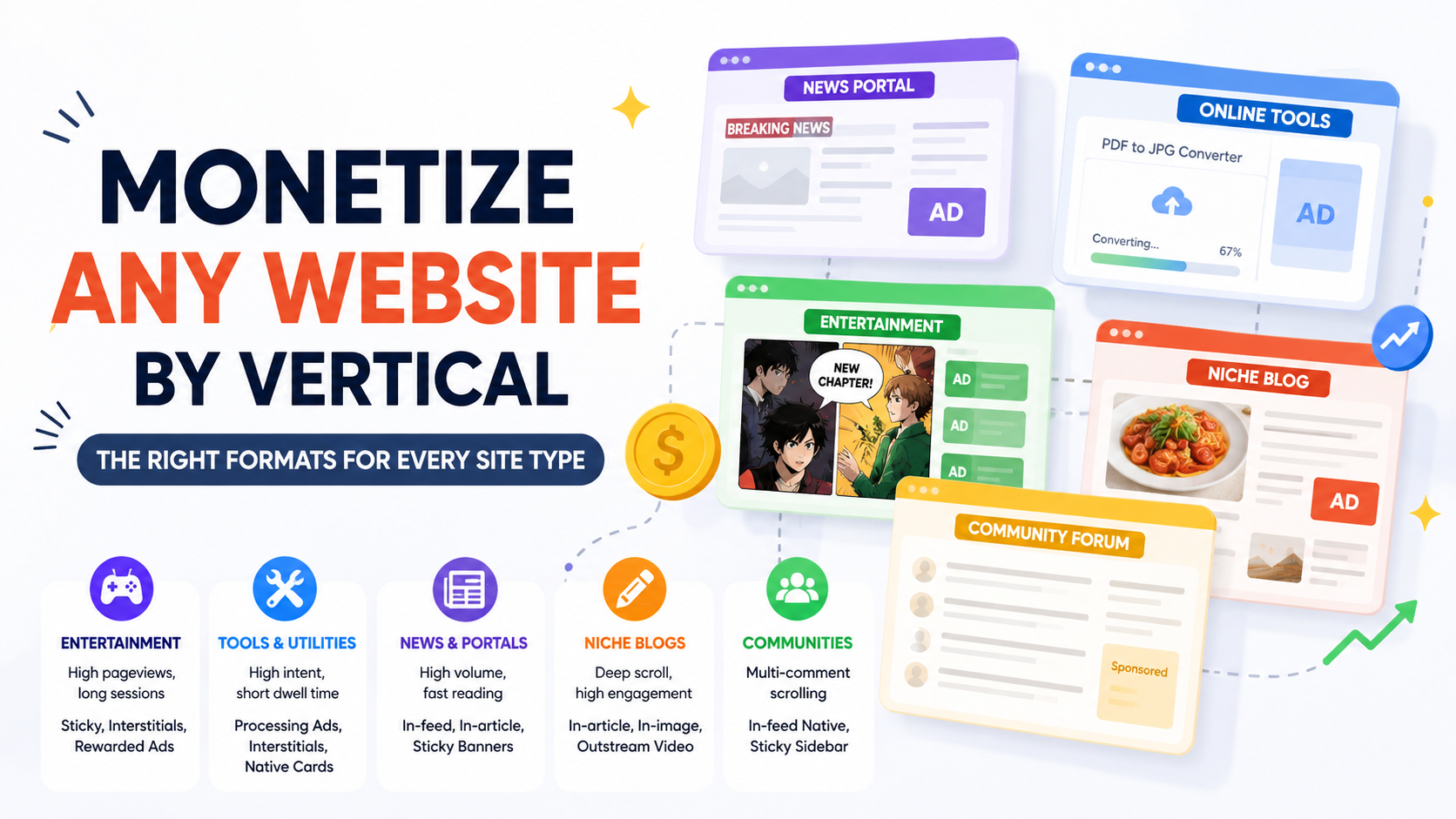
5 major website verticals and their optimal ad monetization models
Different verticals create different monetizable moments:
1. Entertainment and reading sites
Web comics, manga platforms, serialized novels, entertainment portals, and similar sites often generate multiple pageviews from the same visitor. Readers may move through several chapters in one session, making navigation points especially valuable.
Useful formats include sticky footer anchors, native recommendations between chapters, in-content display units, and interstitials placed only at genuine chapter transitions. Long reading pages can also support viewability-based refresh when the implementation and demand policies allow it.
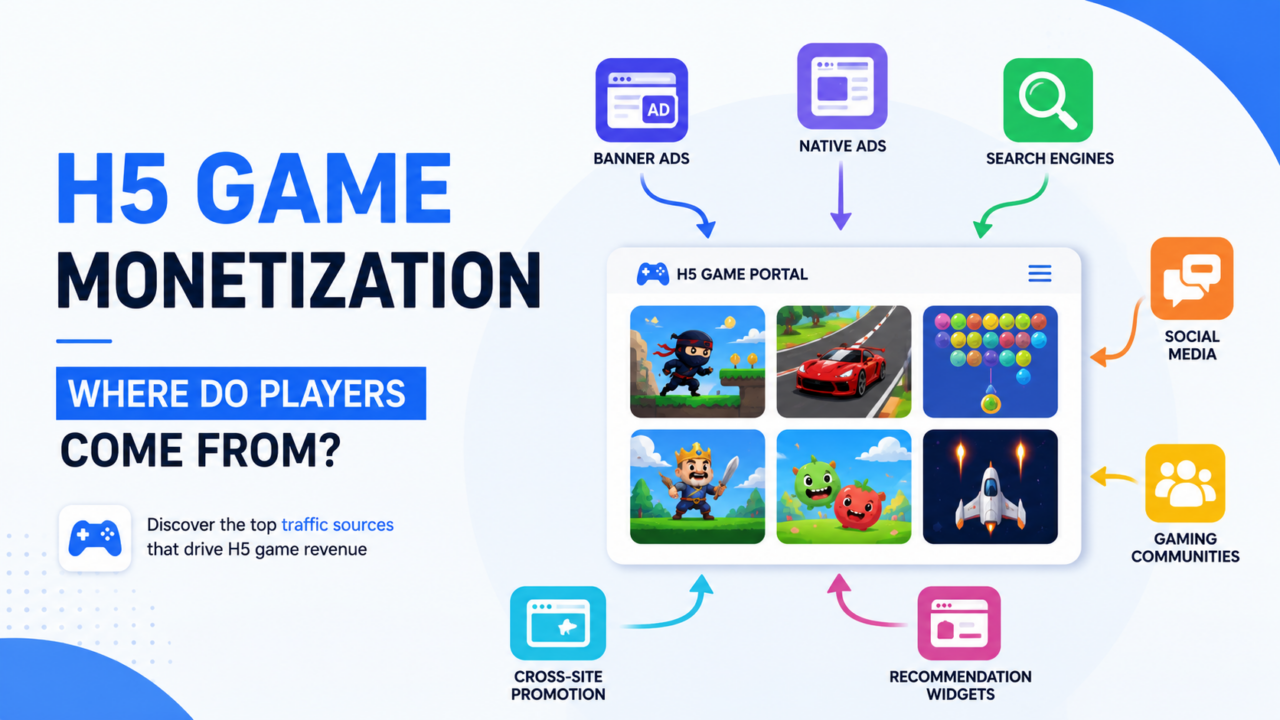
H5 and browser game sites have a different interaction pattern. Advertising works best around gameplay rather than over it. Interstitials can appear between games or meaningful level transitions, while rewarded ads can give users a voluntary value exchange such as extra lives, hints, or virtual rewards. PubFuture also identifies display, sticky, interstitial, rewarded, and native units as formats commonly used across H5 game journeys. (PubFuture)
Streaming and viral-content publishers can test pre-roll when video is the primary content, while text-heavy entertainment pages may use outstream video or floating video formats instead.
2. News and trend-driven portals
News websites usually combine large traffic volumes with shorter article-level sessions. That makes early viewability important, but publishers should avoid crowding the first viewport with too many units.
Standard display banners, in-feed native placements, in-article units, sticky mobile anchors, and desktop sticky sidebars can provide a balanced foundation. Breaking-news pages may also benefit from dynamic placements that respond to article length and reader depth.
Sports and live-score sites experience another pattern: traffic can rise sharply around matches, tournaments, and major events. Sticky units, sponsorship inventory, native placements, and event-relevant campaigns can perform well. Regulated gaming-related demand may also be relevant in jurisdictions where both local law and advertising policies permit it.
Technology, finance, and crypto publications can attract commercially valuable audiences. Alongside standard programmatic demand, publishers with enough scale and inventory quality may explore contextual campaigns, direct packages, or private marketplace deals.
3. Utility and online tools
Ad monetization for online tools should focus on the user’s task rather than surrounding every interface element with banners.
File converters, compressors, download tools, image editors, and similar services often have clear processing stages. A responsive display card or carefully implemented outstream unit can use that waiting time without blocking the workflow.
Interstitials should only appear at natural transitions and should never force a user through an ad to complete a required action.
Calculators, finance tools, comparison utilities, and specialized professional tools can also create strong contextual signals. Relevant advertising may perform better because the user’s intent is already clear.
URL shorteners and file-hosting sites require particular care. Countdown or waiting interfaces can provide monetizable inventory, but ads must remain visually distinct from “Continue”, “Download”, or destination-link controls.
4. Niche blogs and editorial knowledge hubs
Lifestyle, food, travel, DIY, technology, and specialist editorial websites often benefit from deep scrolling rather than extremely high pageviews per session.
This creates natural space for in-article display ads placed between meaningful content blocks. Image-heavy websites can test in-image formats, while longer articles may support outstream video that begins only when the player enters the viewport.
Technology tutorials and product-review sites can combine programmatic advertising with contextual commerce or affiliate monetization. Comparison-focused pages may also attract higher-value campaigns because visitors are closer to a decision.
For these publishers, website vertical ad revenue depends heavily on content depth, viewability, device mix, and commercial intent. Adding more units is rarely as effective as improving the quality of the placements already available.
5. Community and user-generated content platforms
Forums, discussion boards, Q&A websites, and other UGC platforms often create long scrolling sessions with repeated content modules.
Native or display units can appear between groups of posts rather than between every comment. Desktop layouts may also support sticky sidebars, while mobile pages can use restrained top or bottom anchors.
Random-chat or matching platforms have another natural monetization point: the waiting state between interactions. A publisher can monetize this screen as long as advertising does not imitate system controls or interfere with the user’s ability to continue.
Q&A sites can place native or display units below completed answers, related discussions, or recommendation modules instead of interrupting the answer itself.
Monetization blueprint across major website verticals
A useful website monetization by vertical blueprint connects the traffic pattern with both format selection and refresh logic.
| Website vertical | Traffic and behavior profile | Primary ad formats | Recommended refresh logic |
|---|---|---|---|
| Entertainment and comics | High pageviews, long sessions | Sticky anchor, chapter-break units, rewarded formats | Viewability-based or 30+ second refresh on eligible long sessions |
| News and trends | High volume, faster reading | In-article display, sticky footer, native in-feed | 30+ seconds only when inventory remains eligible and viewable |
| Utility tools and converters | Short dwell time, strong intent | Processing-screen display, contextual cards, transition interstitials | Prefer meaningful user actions or processing events |
| Niche editorial blogs | Deep scroll, high engagement | In-article display, in-image, outstream video | Viewability-based logic on long-form inventory |
| Forums and UGC | Long scrolling, repeated content modules | In-feed native, display, sticky sidebar | Refresh after meaningful content changes, not ordinary scrolling |
Refresh should not be treated as a fixed RPM shortcut. Google Ad Manager requires publishers to declare refreshing inventory and its trigger. For desktop and mobile web, time-based and event-triggered refresh declarations have a minimum interval of 30 seconds. Google also notes that ordinary scrolling or gameplay clicks do not automatically qualify as user-action refreshes. (support.google.com)
The practical rule is simple: optimize ad stack by website niche and actual engagement, rather than copying one refresh configuration across every property.
PubFuture as a comprehensive monetization partner for global publishers
Managing different verticals becomes more complex when publishers also need to coordinate demand, placements, viewability, and reporting.
PubFuture supports publishers with header bidding and access to multiple demand sources, helping create competition for available inventory instead of relying on a single buyer path. Its publisher resources also cover formats including display, sticky, native, video, interstitial, and rewarded advertising. (PubFuture)
This can be particularly useful for publishers operating several website types. A reading site may prioritize sticky and chapter-transition inventory, while an editorial property focuses on in-article and video placements. The monetization infrastructure can remain centralized while the ad experience changes by vertical.
PubFuture also states that it offers dedicated Ad Ops support and Net-30 publisher payments, helping publishers reduce some of the operational work involved in managing multiple monetization relationships. (PubFuture)
For publishers evaluating programmatic monetization partners, the important question is not only how many demand sources a platform provides. The partner should also be able to adapt placements, formats, and optimization logic to the site’s actual audience behavior.
Key compliance and UX safeguards when selecting ad formats
Higher Page RPM should not come from making ads harder to avoid. Sustainable monetization keeps advertising clearly separate from the actions visitors came to complete.
Keep ads away from action buttons
Tool websites should give clear visual separation between ads and controls such as “Download”, “Convert”, “Next”, “Play”, or “Generate”.
A 20px spacing buffer can be used as an internal design starting point, but publishers should not treat it as a universal Google rule. Google’s publisher policy focuses on preventing ads from being overlaid on or placed immediately next to interactive elements in ways that could cause unintended clicks. (Google Help)
Testing the layout on real mobile screens is more useful than relying only on a fixed pixel value.
Protect the main reading or interaction area
Reading platforms should keep sticky banners away from Next Chapter, Previous Chapter, search, text-entry, and other navigation controls.
Gaming websites should avoid display advertising directly over areas where users repeatedly tap or click. Utility sites should keep the processing result and download action immediately identifiable.
Reserve space before the ad loads
Dynamic advertising can cause layout shifts when the page does not reserve enough room for the creative.
Publishers can define stable containers using CSS dimensions or min-height, then combine them with responsive size mapping where appropriate. This reduces visible page movement and helps protect Core Web Vitals.
Publishers planning more flexible placement logic can also review automated dynamic ad insertion setups.
Read more: Dynamic ad insertion for web publishers: How to automate high-yield placements
Measure revenue at session level
CPM alone can hide poor monetization decisions.
Track Page RPM together with viewability, session duration, pages per session, bounce or exit behavior, device type, and revenue per session. If an aggressive format increases CPM but reduces the number of monetizable moments that follow, the overall setup may still be weaker.
Effective website monetization by vertical starts with understanding why visitors are on the site and where advertising can fit naturally into their journey. Entertainment sites, tools, news portals, specialist blogs, and communities should not run identical ad stacks because their sessions create value in different ways.
Start by identifying your primary website vertical, choose two or three formats that fit its user behavior, then test placements, viewability, and session-level revenue before expanding the setup. Publishers looking to increase competition across their inventory can also explore monetization opportunities with PubFuture and evaluate which formats fit their traffic, content, and growth goals.