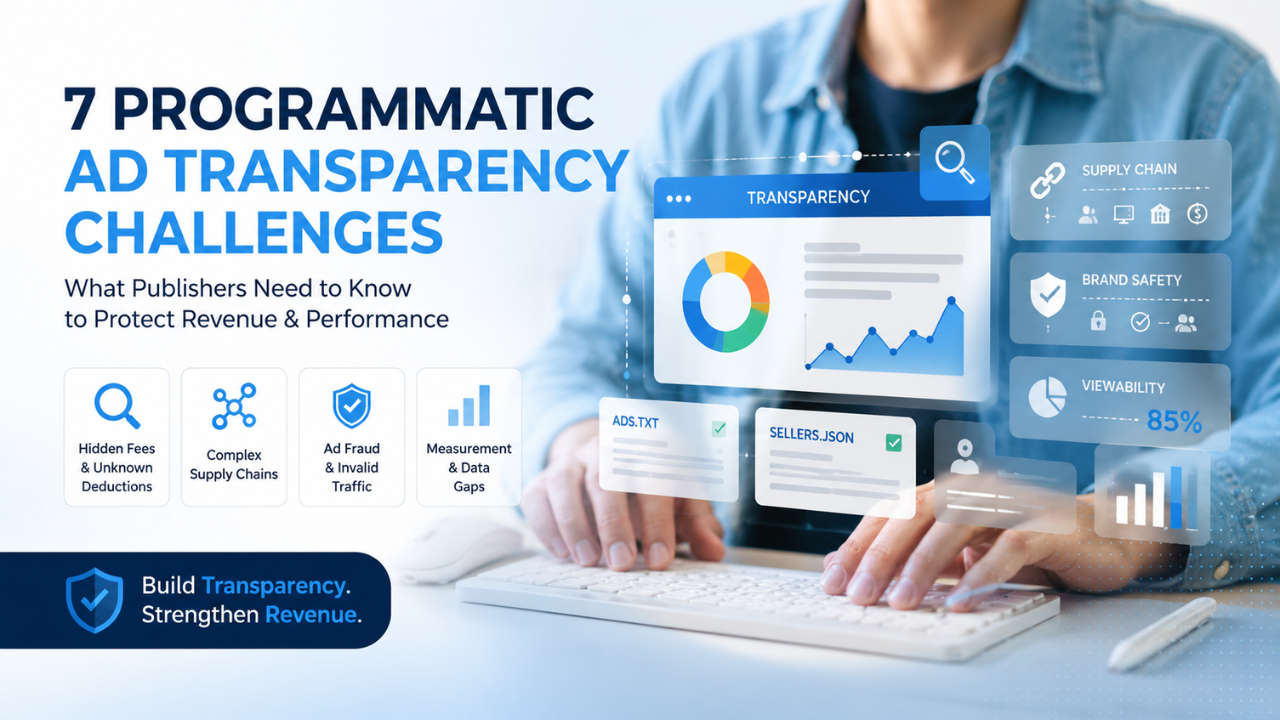




Programmatic advertising has become increasingly focused on efficiency, not just scale. As advertisers look for cleaner and more transparent ways to buy inventory, Supply Path Optimization (SPO) is reshaping how demand reaches publishers. A website connected to multiple SSPs is no longer guaranteed to attract more bids or generate higher revenue.
Instead, buyers are prioritizing inventory delivered through trusted and efficient supply paths. Publishers that reduce unnecessary intermediaries and improve auction quality are often rewarded with stronger demand, better bid competition, and higher long-term yield.
This guide explains why Supply Path Optimization matters, how it influences programmatic revenue, and the practical steps publishers can take to build a more efficient supply path.
Table of Contents
What Supply Path Optimization Means for Publishers
Supply Path Optimization (SPO) is the process of simplifying the route between advertisers and publishers. Instead of buying the same inventory through multiple SSPs, DSPs increasingly select the partners that provide the most efficient, transparent, and cost-effective access.
For publishers, this means the quality of your supply chain has become just as important as the quality of your content. Even if your website attracts valuable audiences, inefficient supply paths can reduce buyer confidence and make your inventory less competitive during programmatic auctions.
Rather than rewarding publishers connected to the largest number of SSPs, today’s buying platforms often favor inventory that reaches them through fewer, higher-performing partners with consistent auction data and lower latency.
Why Supply Path Optimization Affects Publisher Revenue
Higher bid competition
When DSPs identify a clean and reliable supply path, they are more likely to bid consistently on the same inventory. This creates stronger competition during auctions, giving publishers a better opportunity to increase CPMs and overall programmatic yield.
Lower auction duplication
Serving the same impression through multiple SSPs often results in duplicate bid requests. This creates unnecessary auction overlap without adding meaningful demand. A streamlined supply path helps buyers compete more efficiently instead of evaluating identical inventory multiple times.
Better buyer confidence
Advertisers increasingly value transparency throughout the programmatic supply chain. Publishers working with trusted SSP partners and maintaining a consistent inventory structure are more likely to build long-term relationships with premium buyers.
More efficient auctions
Reducing unnecessary hops between buyers and publishers lowers latency and improves auction completion rates. Faster auctions reduce timeout-related revenue loss while creating a healthier environment for demand competition.
Why Too Many SSPs Can Reduce Programmatic Yield
Many publishers assume adding more SSPs automatically increases competition. In reality, too many supply partners can create inefficiencies that discourage buyers rather than attract them.
Duplicate inventory
The same impression may appear through several SSPs simultaneously, forcing DSPs to evaluate identical opportunities repeatedly instead of discovering new demand.
Hidden supply chain fees
Each intermediary may introduce additional transaction costs before advertiser budgets reach the publisher. A longer supply chain can reduce the amount of media spend converted into publisher revenue.
Higher auction latency
More demand partners often increase auction complexity. Longer response times raise the risk of timeouts, particularly for users on slower networks or mobile devices.
Fragmented demand signals
When traffic is distributed across too many supply partners, auction data becomes fragmented. This makes it more difficult for DSPs to identify the most efficient buying path.
Inconsistent reporting
Different SSPs may report metrics differently, making performance analysis more challenging. Without consistent reporting, publishers may continue working with partners that contribute little incremental value.
Signs Your Supply Path Needs Optimization
Several indicators suggest your current supply path may be limiting programmatic performance instead of improving it.
- Multiple SSPs regularly selling the same inventory.
- Declining bid density despite stable traffic.
- Low auction win rates.
- High timeout rates during header bidding.
- Large gaps between bid requests, impressions, and revenue.
- Small revenue contributions spread across numerous SSP partners.
Reviewing these signals regularly helps publishers identify inefficient demand paths before they begin affecting long-term revenue performance.
Best Practices for Supply Path Optimization
Improving Supply Path Optimization requires continuous evaluation rather than one-time adjustments.
Review SSP performance regularly
Monitor CPM, fill rate, bid density, win rate, and revenue contribution for every demand partner. Regular reviews make it easier to identify partners that consistently add value.
Remove consistently low-value partners
If an SSP delivers minimal incremental demand while increasing auction complexity, reducing its participation may improve overall auction efficiency.
Prioritize trusted demand sources
Building stronger relationships with reliable SSPs often delivers better long-term results than maintaining a large number of overlapping partners.
Monitor latency and bid duplication
Auction speed plays an important role in user experience and revenue. Identifying duplicate requests and slow demand sources helps improve overall auction quality.
Test every optimization carefully
Removing supply partners without measurement can reduce competition unexpectedly. Test changes gradually and compare revenue, CPM, and fill rate before making permanent decisions.
Managing these optimizations manually can become increasingly complex as demand partners grow. PubFuture helps publishers evaluate SSP performance, identify inefficient supply paths, and optimize programmatic demand using real auction data. This allows publishers to simplify their monetization setup while maintaining strong competition for every impression.
Looking to improve your programmatic yield? Create a free PubFuture account and submit your website for a personalized monetization review. Our team can evaluate your current monetization setup, identify opportunities to optimize your supply path, and help maximize revenue from your traffic.
Sign up: https://pubfuture.com/auth/signup
Common Supply Path Optimization Mistakes
Choosing partners based only on CPM
A higher CPM does not always translate into higher overall revenue. Bid density, win rate, latency, and demand quality should all be considered together.
Removing SSPs too aggressively
Eliminating several demand partners at once may unintentionally reduce auction competition. Gradual testing provides more reliable results.
Ignoring auction data
Supply path decisions should be based on measurable performance rather than assumptions. Revenue trends, timeout rates, and auction metrics provide a more accurate picture.
Optimizing only for fill rate
High fill rates have limited value if they come from lower-quality demand or significantly lower CPMs.
Treating optimization as a one-time project
DSP buying strategies continue to evolve. Regular reviews help publishers adapt their supply path as buyer preferences and market conditions change.
Why Supply Path Optimization Will Become Even More Important
Supply Path Optimization is no longer simply an advertiser initiative. As DSPs continue reducing unnecessary intermediaries, publishers that provide transparent, efficient, and high-quality inventory will become increasingly attractive to buyers.
Emerging trends such as AI-powered bidding, curated marketplaces, supply path transparency, and stronger first-party data strategies are all encouraging more direct relationships between buyers and publishers. Rather than competing through quantity, publishers will increasingly compete through supply quality.
Supply Path Optimization is becoming an essential strategy for publishers seeking higher programmatic yield. By reducing unnecessary intermediaries, evaluating SSP performance regularly, and focusing on efficient demand paths, publishers can improve auction quality, strengthen buyer confidence, and generate more sustainable advertising revenue.
If you’re looking to improve your website monetization strategy, the PubFuture team can help evaluate your current programmatic setup and identify opportunities to optimize your supply path. Contact [email protected] to discuss your monetization goals.