


Entertainment websites often have something many publishers want: users who stay. Visitors may browse several celebrity stories, read multiple comic chapters, explore movie content, listen to audio, or move between recommendation pages during the same session. This behavior creates more monetization opportunities than a short one-page visit.
Effective entertainment website monetization therefore depends on more than placing additional display banners across the page. Publishers can use session depth, repeated content consumption, viewability, and natural transitions to introduce different ad formats at appropriate moments.
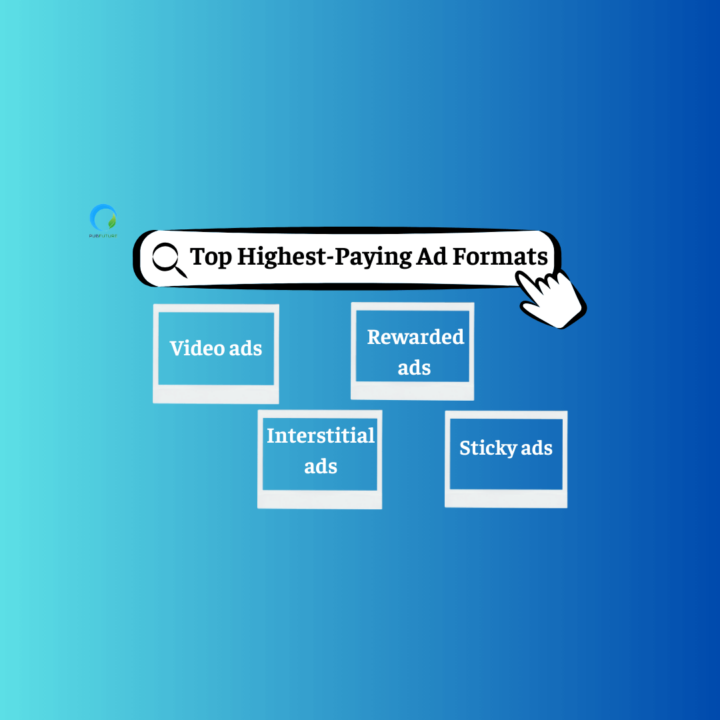
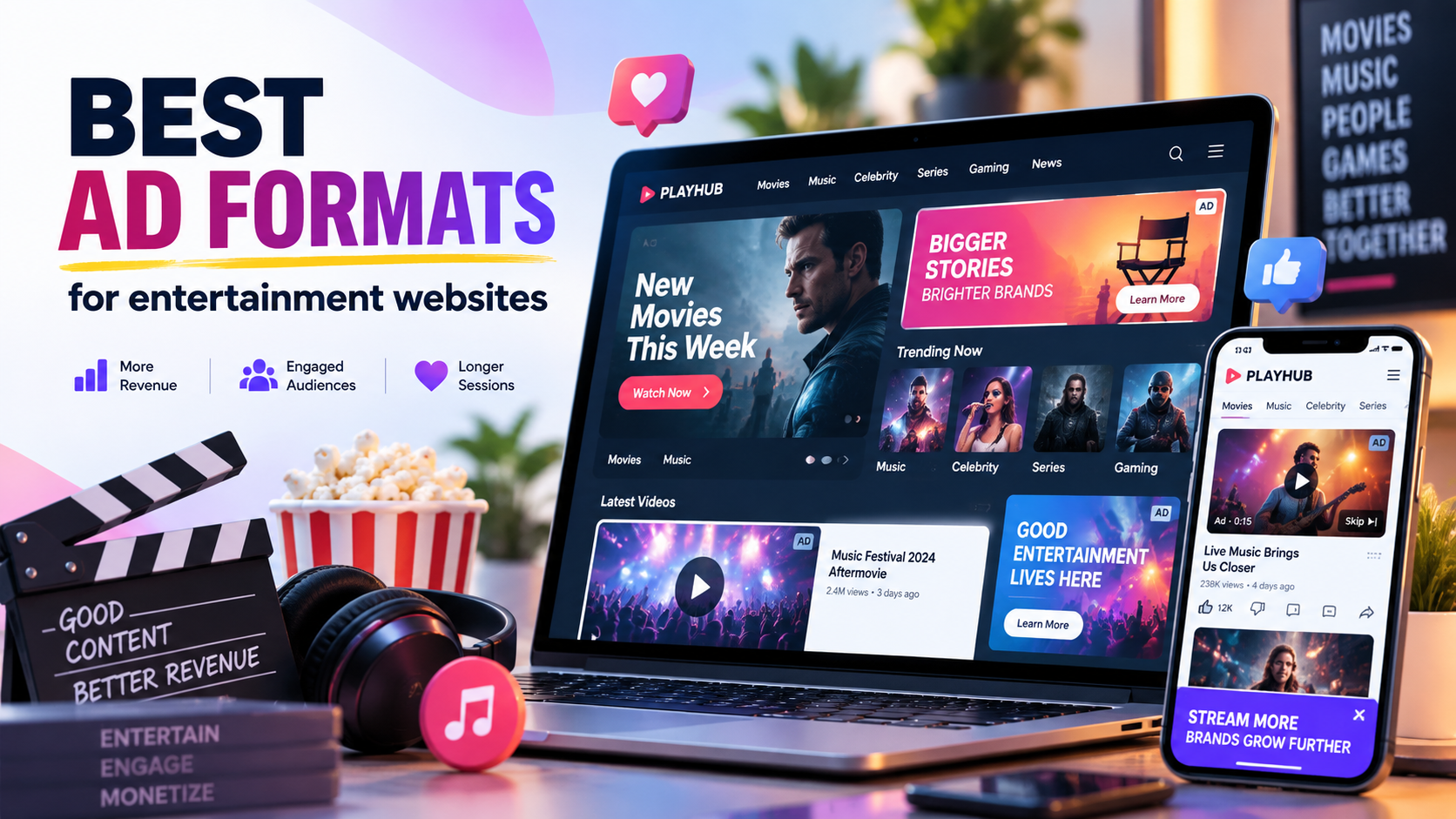
The strongest setup usually combines several formats rather than relying on one unit. Display, sticky, video, interstitial, and refresh strategies can each serve a different part of a long entertainment session while keeping the browsing experience manageable.
Why long user sessions change entertainment website monetization
Long sessions give publishers more opportunities to monetize the same visitor without immediately increasing traffic acquisition.
A visitor who reads one page creates a limited number of viewable ad opportunities. A visitor who opens six pages, scrolls deeply, or spends ten minutes interacting with entertainment content can generate multiple opportunities across the same session.
For publishers, the focus should therefore shift toward session-level monetization. Important signals include:
- Pages per session: Multiple page views create additional inventory without requiring another visitor acquisition.
- Session duration: Longer visits can support formats such as sticky units, video, and carefully managed ad refresh.
- Scroll depth: Users who move further through long-form entertainment content can expose additional in-content placements.
- Content transitions: Moving between episodes, galleries, articles, or sections creates natural moments for formats such as interstitial ads.
The goal is to capture these opportunities without turning a long session into an overloaded advertising experience.
Display ads remain the foundation for entertainment websites
Display advertising still provides the base layer for many entertainment website monetization strategies:
In-content display ads
In-content placements work particularly well on entertainment articles, rankings, celebrity news, reviews, recaps, and other pages with substantial scroll depth.
Rather than loading several units near the top of the page, publishers can distribute ads throughout the content. This allows ads to enter the viewport as the reader progresses naturally.
Placement should follow the structure of the content. Ads inserted between meaningful sections generally create a cleaner experience than units positioned too close to navigation controls, images, or clickable interface elements.
Sidebar display ads
Desktop entertainment sites can also use sidebar inventory, particularly when their layouts include long articles or persistent content columns.
Sidebar units should remain visible enough to generate demand while avoiding excessive empty space when the main content extends far beyond the sidebar. Sticky behavior can sometimes improve this inventory, although publishers should evaluate it separately from standard sidebar placements.
Below-content inventory
Entertainment visitors frequently continue browsing after completing an article, episode, or gallery. Ads positioned near related-content sections can therefore remain valuable even near the bottom of the page.
These placements can capture users who have already demonstrated strong engagement and are preparing to move to another page.
Internal link: High CTR Banner Ad Placements: Where Publishers Can Improve Visibility Without Hurting UX
Sticky ads can monetize extended browsing time
Sticky advertising is particularly relevant for websites where visitors remain on a page for several minutes:
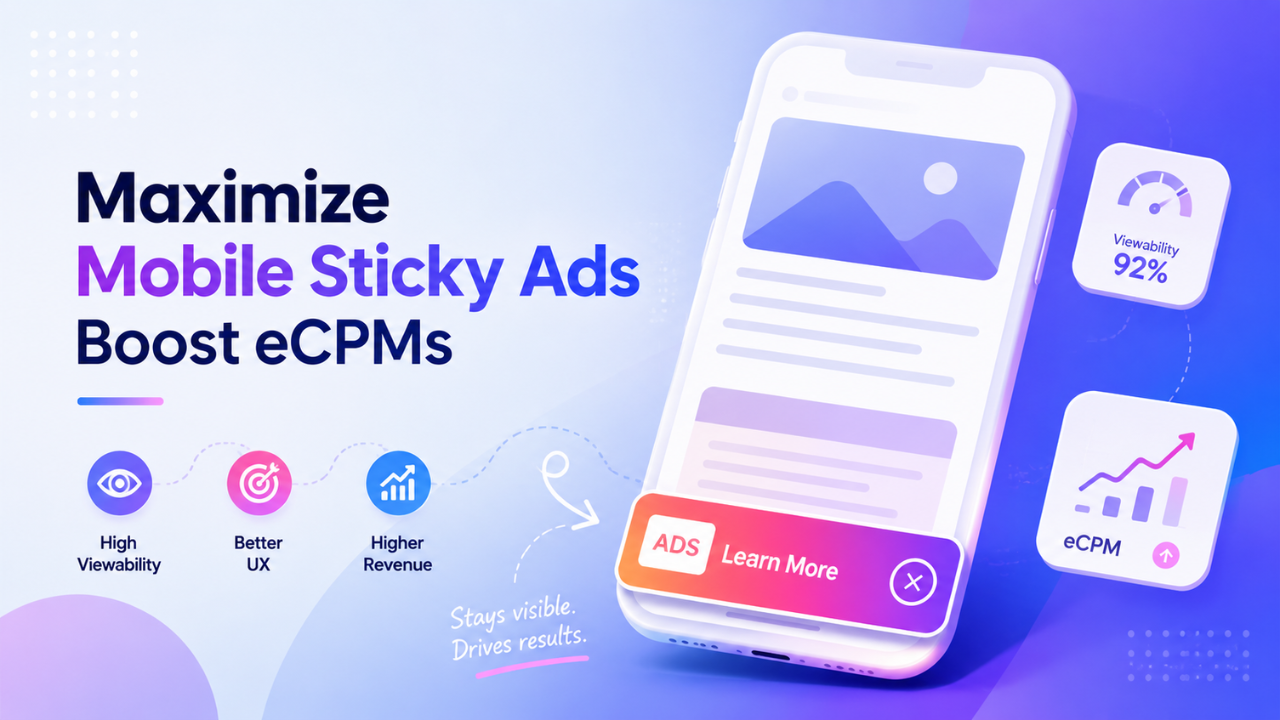
Mobile sticky ads
A small sticky banner anchored to the bottom or top of the screen remains available while visitors scroll through entertainment content.
Because the unit maintains visibility, it can generate stronger viewability than banners that quickly leave the viewport. This makes sticky placements useful for mobile-heavy entertainment sites where users frequently consume long articles, comics, discussions, or media pages.
Publishers still need to preserve enough screen space for the content itself. Oversized sticky units can quickly become intrusive on smaller devices.
Desktop sticky units
Desktop layouts provide more space for sticky side placements. A sidebar unit can remain within the viewport while the user continues scrolling through a long entertainment page.
This approach increases the amount of time an ad is available for viewing without requiring publishers to insert additional banners throughout every section.
Sticky inventory should remain clearly separated from navigation, video controls, and other interactive elements.
Internal link: Mobile Sticky Ads: Placement Strategies for Better Viewability and Revenue
Outstream video adds premium inventory without requiring video content
Entertainment websites are often a natural environment for visual advertising, even when the publisher does not produce its own video library:
Outstream video within articles
Outstream video units can appear inside editorial content and begin when the placement enters the user’s viewport.
This gives entertainment publishers access to video demand without needing to build every page around a video player. The format can fit celebrity stories, entertainment news, reviews, rankings, lifestyle features, and other article-based content.
The unit should occupy a predictable position within the page rather than unexpectedly covering the content.
Video within long sessions
Longer browsing sessions also create more opportunities to expose users to video inventory across different pages.
Publishers should still manage frequency carefully. Showing a large video unit on every page can reduce the quality of a session even when the visitor continues browsing.
A better setup evaluates when video appears, where it appears, and how frequently the same visitor encounters it.
Internal link: Outstream Video Ads: How Publishers Can Monetize Without Owned Video Content
Interstitial ads work best at natural content transitions
Interstitial advertising can create valuable monetization opportunities on entertainment websites, particularly when users regularly move between content:
Between episodes or chapters
Comic, manga, web novel, and episodic entertainment sites have natural transition points between chapters.
An interstitial shown after a user completes one chapter and before the next page begins can fit the browsing flow more naturally than an interruption during active reading.
Between gallery or content sessions
Some entertainment sites use image galleries, rankings, episode pages, or collections where visitors intentionally continue from one item to another.
These transitions can provide opportunities for interstitial ads when frequency controls are applied carefully.
Frequency is more important than raw volume
A long session does not mean every page transition should trigger an interstitial.
Repeated interruptions can quickly weaken the user experience. Publishers should use session-level frequency controls and monitor whether visitors continue browsing after the format appears.
The value of interstitial inventory comes from selecting strong opportunities, rather than maximizing the number of interruptions.
Internal link: Interstitial Ads for Publishers: Timing, Frequency, and User Experience Best Practices
Ad refresh can capture additional value from long sessions
Ad refresh becomes particularly relevant when users remain on the same page for extended periods:
Viewability-based refresh
A banner that remains visible for a meaningful period can potentially receive another ad request through controlled refresh.
Viewability-based rules are generally more useful than refreshing every placement automatically. The publisher can focus refresh activity on units that users are actually seeing.
This can increase monetizable impressions during long entertainment sessions without inserting more physical ad slots into the layout.
Refresh works better on high-engagement pages
Pages with long reading time, active browsing, or persistent content environments provide stronger conditions for refresh than pages users leave almost immediately.
Entertainment formats such as long articles, live discussion pages, comic readers, music pages, and continuously updated content can therefore be good candidates for testing.
Publishers should monitor viewability, demand response, user behavior, and overall page performance instead of treating refresh as a universal setting.
Internal link: Smart Ad Refresh for Publishers: When More Impressions Can Increase Revenue
Lazy loading helps control ad delivery across long pages
Entertainment websites can contain many images, widgets, recommendation blocks, media elements, and ad placements. Loading everything immediately can create unnecessary pressure on page performance.
Lazy loading allows selected ad units to request demand closer to the moment when users approach them.
For publishers, this provides several benefits:
- Fewer unnecessary ad requests: Units far below the fold do not need to load when a visitor leaves before reaching them.
- Better alignment with viewability: Ads can enter the auction closer to the point when users are likely to see them.
- Cleaner long-page monetization: Publishers can include placements across deeper sections without forcing every unit to load at page start.
- Improved resource management: Ad scripts and creative assets can be distributed more gradually throughout the session.
Entertainment sites with long scrolling pages should pay particular attention to the distance at which an ad begins loading. Loading too late can leave a blank space before the creative appears, while loading too early reduces some of the benefits.
Build an ad format mix around the entertainment session
The best ad formats for entertainment websites usually work together:
Short entertainment articles
Short celebrity updates, breaking entertainment news, or quick reviews may work best with a simple setup including display and sticky inventory.
Because the page itself offers limited engagement time, adding multiple high-impact formats can create more advertising pressure than the content can support.
Long articles and editorial features
Long-form entertainment pages can support in-content display placements, sticky units, outstream video, and selected viewability-based refresh.
The additional session duration gives publishers more opportunities to distribute monetization throughout the page.
Comics, novels, and episodic content
Chapter-based platforms can combine standard display units with sticky advertising and carefully timed interstitials between natural transitions.
Session depth becomes especially important here because a visitor may consume many chapters during one visit.
Entertainment portals and fan communities
Sites where users repeatedly navigate between news, rankings, profiles, forums, and media pages can use a broader combination of display, sticky, video, and transition-based inventory.
The key metric is the overall experience across the session, rather than the ad density of a single page.
Optimize entertainment website monetization around session value
Entertainment publishers should evaluate monetization across the full user journey:
- Track revenue per session: Page-level eCPM alone does not reveal how much value a highly engaged visitor generates over multiple pages.
- Measure viewability by placement: Units with stronger visibility may deserve greater priority than placements producing large numbers of low-quality impressions.
- Review formats by device: A sidebar unit that works well on desktop may need to become a sticky or in-content placement on mobile.
- Control high-impact formats: Interstitial and video frequency should be evaluated across the entire user session.
- Test demand coverage: Different formats may attract different pools of advertiser demand, making a diversified setup more useful than relying on one inventory type.
Publishers with complex entertainment inventory can also work with a monetization partner to evaluate demand coverage, placement performance, ad formats, refresh conditions, and session-level opportunities. PubFuture supports publishers with multiple monetization formats and optimization strategies designed around the characteristics of their inventory rather than a single fixed setup.
The strongest configuration should ultimately improve the value of existing engagement rather than simply increase the number of ads visible at once.
Entertainment websites often generate value across the entire user session rather than from a single page view. Managing that inventory effectively requires the right mix of demand, ad formats, placement strategy, and delivery controls across different pages and devices.
PubFuture helps entertainment publishers build a broader monetization setup around their existing traffic and engagement patterns. Depending on the site structure, publishers can combine display, sticky, video, interstitial, and other programmatic formats while optimizing demand coverage, viewability, fill rate, and overall inventory performance.
For websites with long sessions, PubFuture can also help publishers identify where additional monetization opportunities exist without simply increasing ad density. This may include improving demand competition for existing placements, testing higher-value formats, optimizing mobile and desktop inventory separately, and reviewing how ads perform across deeper page views.
The goal is to make more effective use of the engagement the website already generates while maintaining a sustainable experience for returning and highly active users.
Ready to improve your entertainment website monetization? Sign up with PubFuture to explore more demand sources, ad formats, and optimization opportunities for your inventory.
Choosing the best ad formats for your entertainment website
There is no single format combination that fits every entertainment publisher.
A celebrity news site with short articles has different inventory from a manga reader where visitors consume twenty chapters in one session. A streaming-related portal may also have different device usage and interaction patterns from a long-form entertainment magazine.
Start with the behavior already visible on the site. Session duration, pages per visit, scroll depth, device distribution, viewability, and content transitions can show where additional monetization opportunities exist.
For many publishers, the strongest entertainment website monetization setup combines standard display inventory with one or two formats designed specifically for deeper engagement, such as sticky ads, outstream video, controlled interstitials, or viewability-based refresh.
Long user sessions provide valuable inventory, but the opportunity comes from using those sessions intelligently. Publishers that align formats with how visitors actually consume entertainment content can generate more monetizable opportunities while maintaining a sustainable browsing experience.
PubFuture helps web publishers evaluate ad formats, demand coverage, and monetization opportunities across different traffic and content environments. Explore a PubFuture partnership to identify a monetization setup suited to your entertainment website and its user sessions.