


In 2026, ad viewability is no longer a technical checkbox, it’s a defining factor in publisher revenue. As programmatic advertising matures and advertisers shift toward attention-based buying, viewability has become one of the strongest signals of inventory quality.
If you’re a publisher looking to increase CPMs, improve fill rates, and attract premium demand, optimizing ad viewability is no longer optional. It’s strategic.
This guide explains what ad viewability means in 2026, why it directly impacts revenue, common reasons it drops, and how to improve it sustainably.
Why Viewability Is No Longer Optional
1. The Shift from Impressions to Attention-Based Buying
For years, digital advertising focused on served impressions, ads that loaded on a page. But advertisers quickly realized a critical flaw: just because an ad loads doesn’t mean a user sees it.
In 2026, buyers prioritize viewable impressions and increasingly, attention metrics. With AI-driven campaign optimization and stricter performance requirements, advertisers demand proof that their ads are actually seen.
2. Why Advertisers Prioritize Viewable Impressions
Modern DSPs and brand advertisers evaluate:
- Viewability rate
- Time-in-view
- Scroll behavior
- Engagement signals
Low-viewability inventory is often filtered out before bidding even begins. That means publishers with weak viewability scores lose access to premium demand automatically.
3. Direct Impact on CPMs, Fill Rate, and Demand Quality
Ad viewability directly influences:
- Higher CPMs: High-viewability placements attract more competition.
- Better fill rates: Demand partners prefer reliable, quality inventory.
- Stronger demand quality: Brand budgets flow toward premium environments.
In a programmatic ecosystem powered by AI optimization, viewability acts as a quality multiplier.
What Is Ad Viewability
In digital advertising, viewability refers to how visible an ad appears to a user on a site or device. Specifically, it measures how much of the digital ad or video is within the user’s view and for how long. For an ad to be considered viewable, it must meet the industry standard set by the IAB in 2014:
- Display Ads: At least 50% of an ad’s pixels in view for a minimum of 1 second to qualify.
- Video Ads: At least 50% of the video must be visible on the screen and play continuously for at least 2 seconds.
However, different SSPs may use a different viewability measurements. For example, when it comes to large-size creatives (display ads sized at 242,500 pixels or greater), Xandr and OpenX count the ad as viewed when 30% of the creative is visible for 1 second.
Why Viewability Is a Direct Revenue Driver in 2026
1. Higher CPMs Through AI-Driven Pricing
Modern DSPs use AI models to predict impression value before bidding. Inventory with strong historical viewability signals is assigned a higher expected value.
This leads to:
- More aggressive bidding
- Stronger clearing prices
- Higher average CPM
Low-viewability placements, on the other hand, often trigger discounted bids or limited participation.
Publishers optimizing viewability especially when supported by advanced monetization platforms like PubFuture, frequently see measurable CPM uplift because their inventory is perceived as premium.
2. Access to Premium Brand Budgets
Most brand campaigns now require:
- 65–75%+ viewability
- Stable performance history
- Clean traffic signals
If your inventory doesn’t meet these thresholds, it may be automatically filtered out at the DSP level.
That means lower competition and lower revenue, even if traffic volume remains the same.
High viewability acts as a gateway to premium demand, including PMPs and high-value video campaigns.
3. Improved Bid Density and Auction Competition
One of the most overlooked revenue drivers is bid density, the number of buyers competing per impression.
Higher viewability leads to:
- More DSP participation
- Stronger competition per auction
- Increased price pressure upward
Programmatic auctions reward quality with competition. When multiple demand sources trust your inventory, the clearing price naturally increases.
Low-viewability inventory often experiences:
- Fewer active bidders
- More passbacks
- Greater revenue volatility
By improving viewability, publishers increase not just CPM, but auction stability.
4. Viewability Influences Floor Pricing Strategy
In 2026, dynamic floor pricing is widely used across header bidding setups.
But floors only work effectively if inventory quality supports them.
High-viewability placements allow publishers to:
- Confidently raise price floors
- Reduce underpriced inventory
- Maintain higher clearing prices
If viewability is low, aggressive floor increases often lead to:
- Fill rate drops
- Revenue instability
- Auction inefficiencies
In other words, viewability provides the foundation for effective pricing strategy.
Why Viewability Drops
1. Poor Ad Placement
Common mistakes include:
- Overloading below-the-fold placements
- Stacking multiple units in one viewport
- Ads partially hidden by design elements
- Placing ads in low-scroll areas
Increasing ad quantity rarely increases revenue. It often decreases average viewability and CPM.
2. Slow Page Speed
Page speed directly affects ad viewability.
Issues include:
- Ads loading after users scroll past
- Heavy scripts causing delays
- Poor lazy loading logic
- CLS (Cumulative Layout Shift) problems
If ads load too late, they may technically serve but never become viewable.
3. Layout & UX Problems
Modern UX mistakes can damage viewability:
- Infinite scroll without proper lazy loading triggers
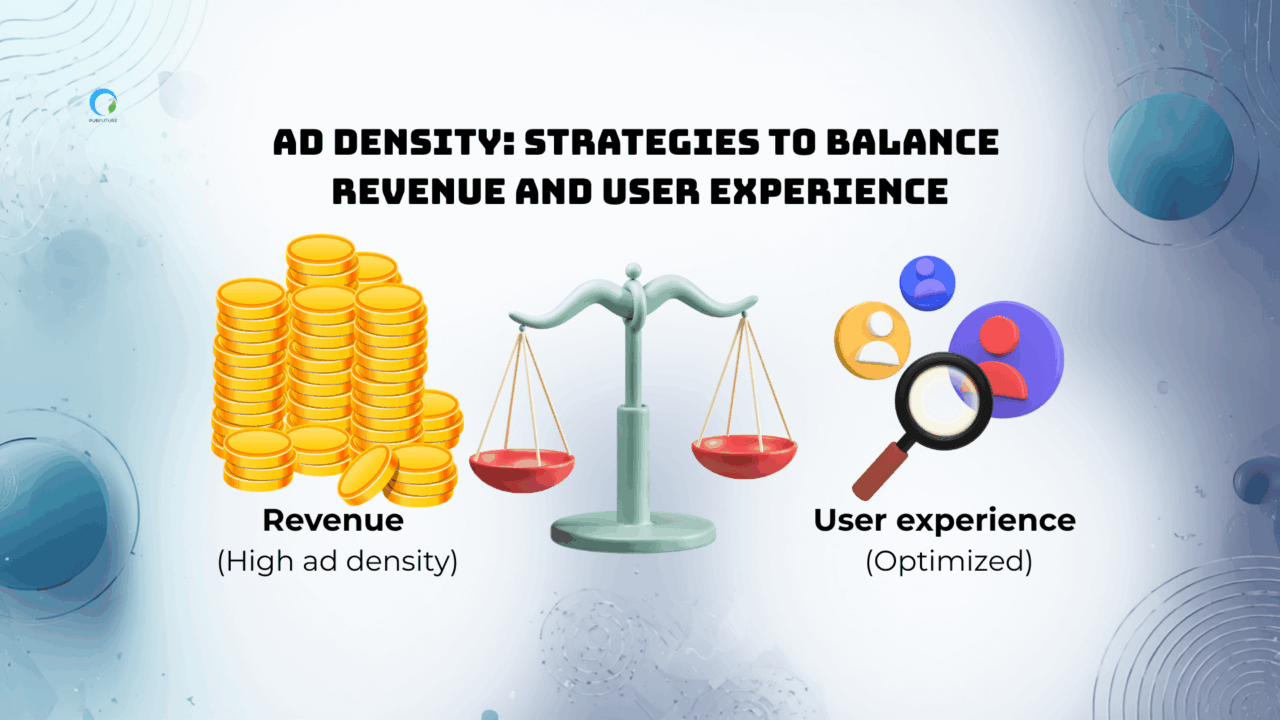
- Excessive ad density
- Poor mobile responsiveness
- Large layout shifts
User experience and viewability are deeply connected. When UX suffers, so does revenue.
4. Traffic Quality Issues
Not all traffic performs equally.
Low viewability often correlates with:
- High bounce rate sources
- Low engagement traffic
- Invalid or accidental traffic
- Misaligned acquisition channels
Premium demand favors engaged audiences, not just high volume.
How to Improve Ad Viewability in 2026
1. Optimize Page Speed
A slow-loading website is the biggest offender of ad viewability. Page speed directly affects ad revenue, so consider making page speed your top priority.
To improve page speed on your site, we recommend:
- Implement proper lazy loading.
- Reduce unnecessary third-party scripts.
- Minimize JavaScript execution time.
- Optimize Core Web Vitals (especially LCP and CLS).
Faster pages = higher viewability = stronger CPMs.
2. Improve ad load speed
One of the most critical factors impacting ad viewability is user behavior combined with the ad load speed.
This means that even if your website is fast but ads take too long to load, there might be a negative impact on your ad viewability.
To improve your ad load speed:
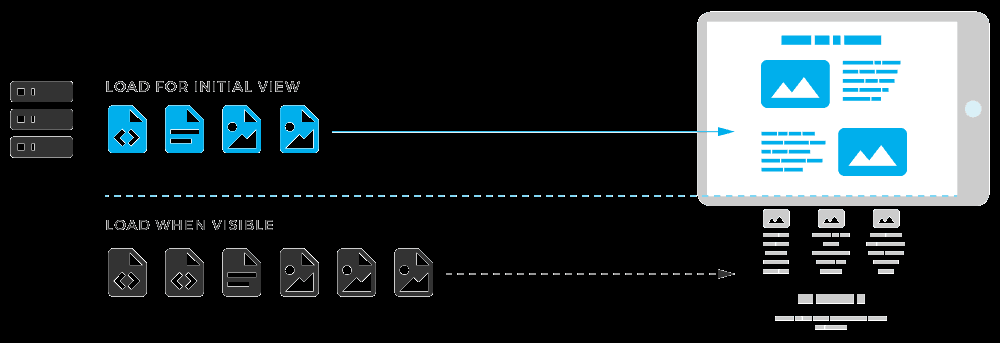
- Implement lazy loading for below-the-fold ads. The concept of lazy loading is simple–an ad request is triggered right when the user is most likely to see it. But remember, there is no point in implementing lazy-loading for banners that are visible above the fold because you want them to load as fast as possible. At PubFuture, we implement intelligent lazy loading for below-the-fold ads to trigger requests at the optimal moment, improving viewability without affecting page speed.
- Minimize passbacks. This will reduce the number of ad calls made from one server to another. Fewer ad calls will reduce page latency and improve ad viewability. Moreover, this can help your video inventory, as videos load faster, and users are more likely to stick around and watch them.
3. Select High-Performing Ad Sizes
- Prioritize vertical formats (e.g., 160×600):
Vertical ad units tend to stay visible longer than horizontal ones, which leads to higher viewability rates. Sidebar placements, in particular, consistently perform well across the industry. - Use sticky banners strategically:
Sticky ads remain fixed within the viewport and stay visible throughout the session, significantly improving measurable viewability. - Be cautious with large ad formats:
Larger banners may struggle to hit viewability thresholds because users must scroll further for at least 50% of the ad to appear on screen. Some SSPs even apply different measurement standards to oversized units. - Optimize for mobile with proven sizes:
High-performing mobile formats such as 300×250 (medium rectangle) and 320×100 (large mobile banner) typically deliver the best performance results.
4. Use AI & Dynamic Layout Optimization
In 2026, AI-driven monetization is essential.
Advanced strategies include:
- Adaptive ad refresh (only when in view).
- Machine learning to reposition ad units.
- Header bidding optimization for competitive demand.
- Dynamic floor pricing based on viewability performance.
Automation ensures you maximize revenue without harming user experience.
Final Thoughts
In 2026, ad viewability is no longer just a technical benchmark, it’s a direct revenue signal. It influences CPMs, auction competition, access to premium brand budgets, and overall monetization stability.
Publishers who continue focusing on impression volume alone will struggle in an AI-driven programmatic landscape. Those who prioritize attention, smart ad placement, page performance, and traffic quality build stronger and more predictable revenue streams.
That’s why sustainable monetization strategies like those implemented by PubFuture center on improving viewability without sacrificing user experience. Because higher viewability doesn’t just increase ad revenue; it strengthens your long-term position in the advertising ecosystem.
In 2026, success isn’t about serving more ads.
It’s about serving ads that are actually seen.