


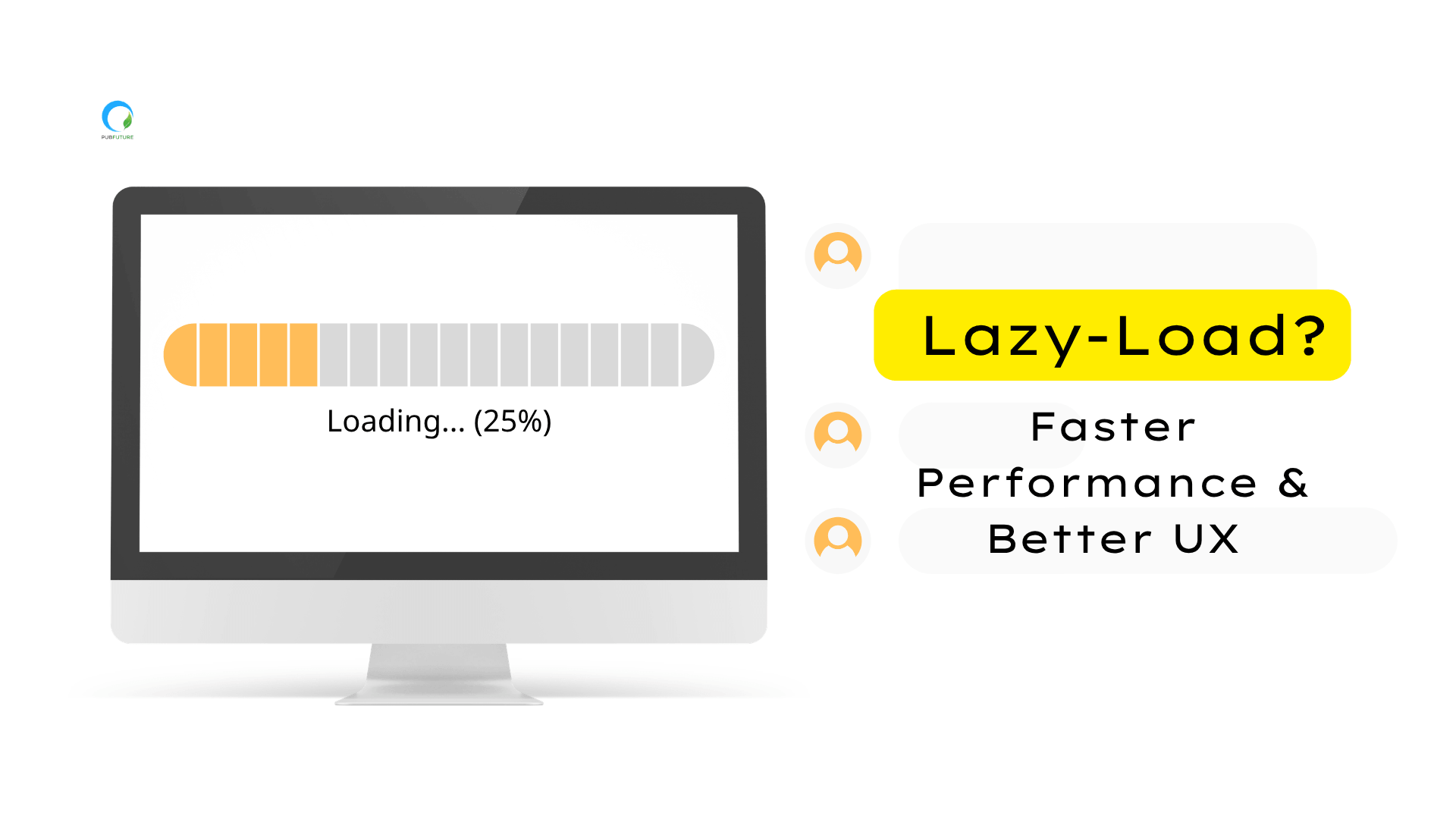
As every millisecond of page loading can influence the effectiveness of a campaign, lazy loading becomes a crucial solution that assists both advertisers and publishers in attaining improved performance.
Lazy loading helps publishers optimize page speed, improve user experience, and maintain strong advertising performance without sacrificing monetization opportunities.
In this guide, we’ll explore how lazy loading works, why it matters for publishers, and how it can significantly improve both site performance and user engagement.
What Is Lazy Loading?
Lazy loading is a web optimization technique where content such as images, videos, or ads only loads when it becomes visible in the user’s viewport instead of loading everything at once when the page opens.
In a traditional setup, the browser loads all page assets immediately, including:
- images
- videos
- ad scripts
- tracking tags
- third-party resources
This can create hundreds of ad requests, slowing down the page.
With lazy loading, only the content visible above the fold loads initially, while the rest loads dynamically as the user scrolls.
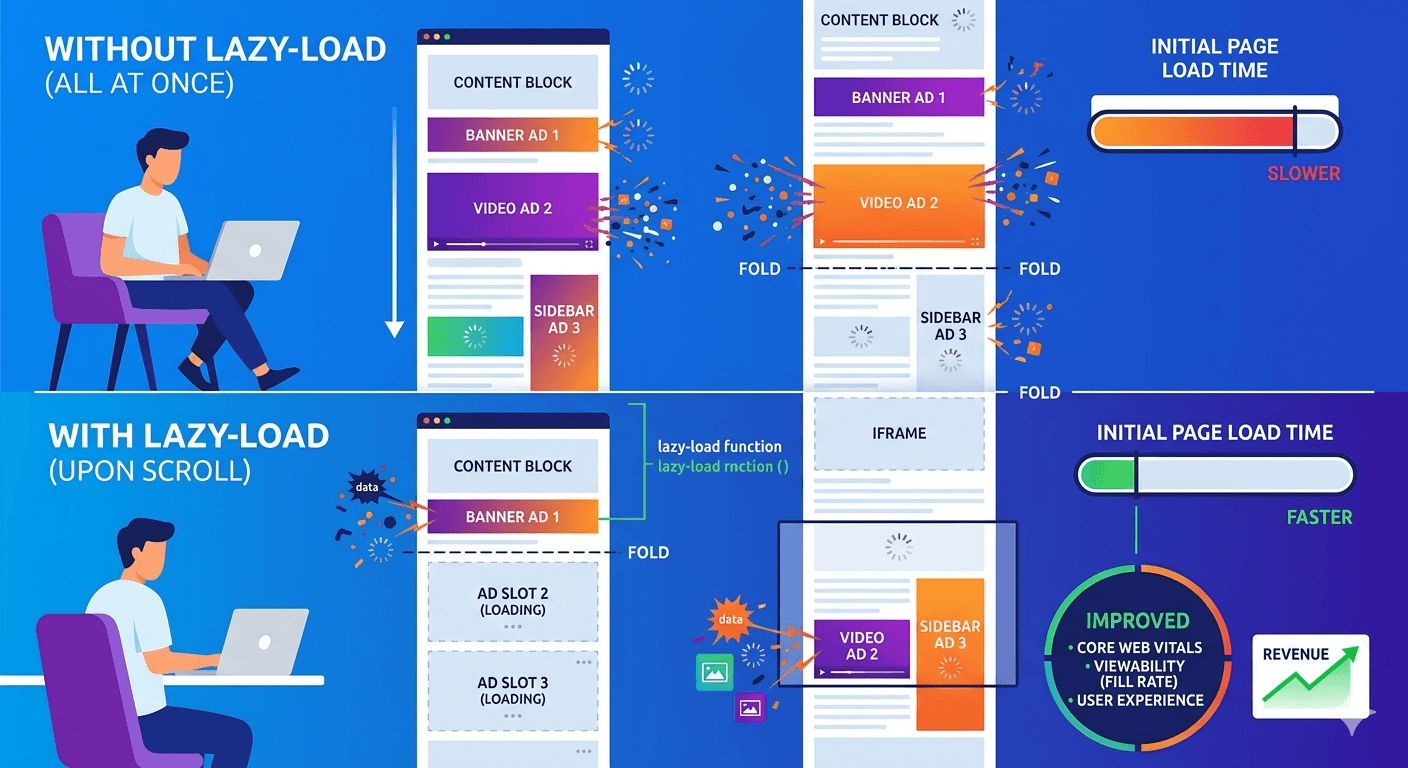
Publishers often run multiple advertising technologies such as header bidding, demand partners, analytics tools, ad scripts, and tracking pixels. Each of these generates additional network requests that can slow down the website. Lazy loading helps reduce this initial load and improves key performance metrics.
Key Benefits of Lazy Loading for publishers
1. Faster Page Load Speed
Page speed is a critical factor for both SEO rankings and user satisfaction.
Lazy loading reduces:
- HTTP requests and JavaScript execution during the initial load
- page weight
- render time
This leads to significantly faster page load times, especially on mobile devices.
2. Improved User Experience (UX)
Slow websites frustrate users. If a page takes more than 3 seconds to load, many visitors will leave before engaging with the content.
Lazy loading improves user experience by:
- reducing waiting time
- minimizing layout shifts
- creating smoother scrolling
For publishers, this means higher session duration and better engagement metrics.
3. Lower Bounce Rates
When pages load faster, users are more likely to:
- stay longer
- read more articles
- visit additional pages
This directly reduces bounce rates and increases overall site engagement.
4. Better Mobile Performance
Mobile users account for the majority of web traffic today. However, mobile devices often have:
- slower connections
- limited processing power
Lazy loading is especially valuable on mobile because it minimizes unnecessary data usage and improves loading performance.
5. Optimized Ad Delivery
For publishers monetizing through programmatic advertising, lazy loading can also improve ad performance. Instead of loading all ads at once, ads are loaded only when users are likely to see them.
Benefits include:
- improved viewability rates
- reduced wasted impressions
- better ad performance metrics
This can lead to higher CPMs and stronger advertiser demand.
Lazy Loading and Programmatic Advertising
Programmatic advertising often involves multiple demand partners competing for inventory through header bidding.
While this increases revenue opportunities, it can also generate a large number of ad requests, affecting site performance.
Lazy loading helps mitigate this issue by:
- delaying ad calls until the ad slot becomes visible
- reducing unnecessary auction requests
- improving page rendering speed
For example, without lazy loading, a page with 10 ad slots triggers 10 header bidding auctions immediately when the page loads. With lazy loading, however, only the ad slots visible to the user trigger auctions first, while the remaining auctions occur gradually as the user scrolls down the page. This reduces unnecessary requests and helps improve page performance.
Lazy Loading Best Practices for Publishers
Implementing lazy loading correctly is essential to avoid SEO or advertising issues.
Here are some best practices publishers should follow.
1. Prioritize Above-the-Fold Content
Always load above-the-fold content immediately, including:
- main images
- first ad slot
- essential scripts
Lazy loading should mainly apply to below-the-fold elements.
2. Use Intersection Observer API
Modern websites should use the Intersection Observer API, which efficiently detects when elements enter the viewport.
Benefits include:
- lower CPU usage
- better performance
- more accurate loading triggers
3. Avoid Lazy Loading Critical Ads
Some ad placements generate significant revenue. Ensure that high-performing ad slots load quickly to avoid revenue loss.
4. Combine Lazy Loading With Other Optimizations
Lazy loading works best alongside other optimization strategies, such as:
- image compression
- CDN usage
- script minification
- asynchronous ad loading
Together, these techniques create a high-performance website architecture.
The Future of Website Performance Optimization
As web technologies evolve, site speed and user experience will become even more important.
Publishers who optimize their websites today will have a competitive advantage in:
- search engine rankings
- audience retention
- advertising revenue
Lazy loading is one of the simplest yet most effective strategies to achieve these goals.
Ready to Optimize Your Ad Performance?
If you’re looking to maximize revenue while maintaining fast website performance, the right monetization strategy makes all the difference.
At PubFuture, we help publishers implement optimized advertising solutions designed to increase revenue without compromising user experience.
Get in touch with our team today to discover how PubFuture can help you unlock your website’s full monetization potential.