




In 2026, publishers all want the same thing: to scale traffic revenue without guesswork, using battle-tested monetization strategies instead of random experiments.
This guide explains how leading publishers scale traffic revenue through multi-format advertising, hybrid demand systems, and structured optimization frameworks — backed by real-world PubFuture case studies and the market trends that matter most in 2026.
1. What’s Actually Changing in 2026
Total digital ad spend reached $259B in 2024, growing ~15% YoY — and growth continues into 2026 as advertisers move more budget into performance-driven formats.
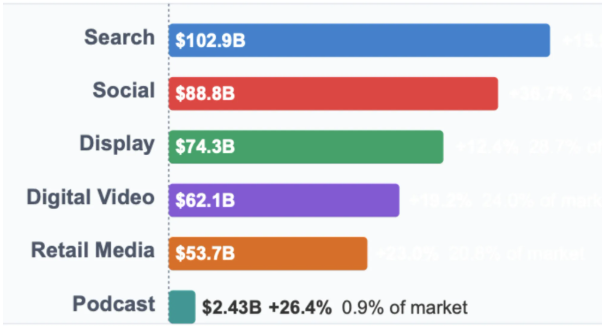
The shift is structural:
the winners are those treating monetization as a system, not as a side feature.
Critical 2026 growth pillars include:
✔ multi-format ads
✔ video and vertical formats
✔ prebid monetization
✔ community-driven engagement
✔ constant optimization
Meanwhile, Agentic AI adoption changes the supply-demand dynamic:
AI agents will negotiate bidding, re-route inventory, and optimize yield autonomously.
Publishers that adapt early gain yield advantages.
Those stuck on outdated setups see flat revenue curves.
2. What Successful Publishers Are Actively Doing in 2026
If you look at the publishers who are consistently growing revenue in 2026, you’ll notice a shared pattern:
they’re not guessing, they’re optimizing.
The winning strategies they use are not secrets or experimental hacks — they’re already being applied by top-performing PubFuture publishers, and can be replicated by any site with a willingness to test and iterate.
a. Expanding Beyond Display With Multi-Format Monetization
Display ads alone no longer drive the majority of revenue for modern publishers.
Instead, the most successful teams are intentionally stacking multiple formats to diversify earning channels and reduce dependency risk.
Popular high-yield formats include:
→ in-stream & out-stream video
→ native & native-like formats
→ vertical mobile placements
→ SmartLink routing
→ OnClick & Vignette ads
→ affiliate & direct brand deals
→ community-driven commerce
In practical terms, a healthy monetization strategy in 2026 usually includes 3–5 active formats, not just banners.
Quick Action Step:
Export your 2025 monetization data segmented by:
✔ format
✔ GEO
✔ device
✔ traffic source
and identify underutilized formats with strong elasticity (video and native formats are usually the easiest wins).
b. Mixing Programmatic, Header Bidding & Direct Demand
Relying on a single demand source caps your earnings.
Top publishers blend different demand channels to increase bid pressure, improve CPMs, and boost overall yield per session.
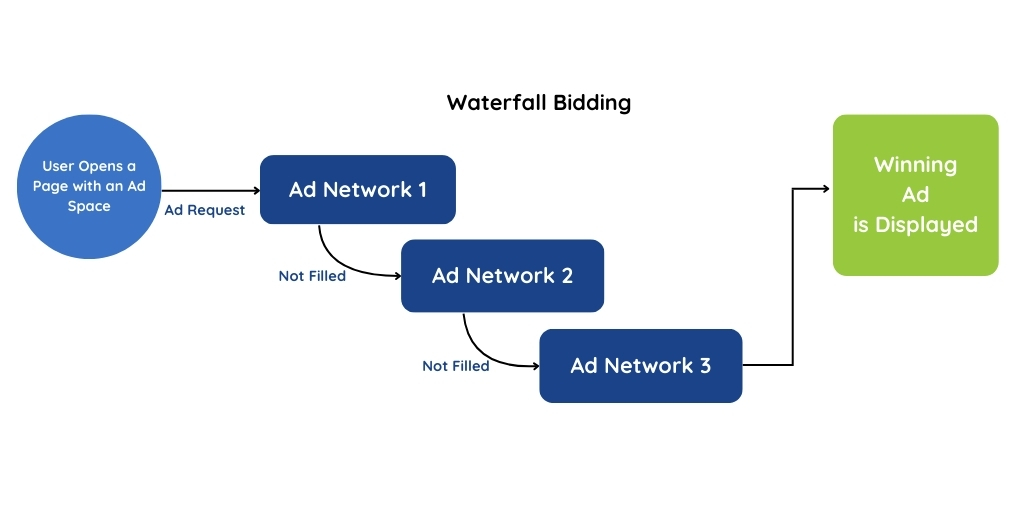
A typical hybrid stack may include:
✔ SSP + DSP demand
✔ traditional IO/direct deals
✔ header bidding wrappers
✔ affiliate or SmartLink funnels
✔ alternative commerce models
Direct partner buys, in particular, often outperform open marketplace auctions by 30%+ on CPM, making hybrid setups a consistent revenue upgrade.
PubFuture’s infrastructure fits well into this approach because it supports multi-format monetization with multiple demand pathways, rather than forcing publishers into a one-size-fits-all model.
c. Balancing Monetization With User Experience
Strong revenue doesn’t matter if traffic declines due to a poor user experience — and publishers are increasingly making UX a revenue metric.
The fastest growers track:
✔ ad density per viewport
✔ layout shifts (CLS)
✔ Core Web Vitals
✔ page speed + time to interactive
✔ bounce rate & scroll depth
✔ session duration
The modern monetization philosophy is not “show more ads,” but rather place better ads, where format and placement match audience intent and device behavior.
d. Capitalizing on Video & Vertical Format Economics
Short-form and vertical video are attracting some of the highest advertiser budgets heading into 2026, especially in entertainment, gaming, news, and community content niches.
If your users already consume video through platforms like:
✔ TikTok
✔ Instagram Reels
✔ YouTube Shorts
✔ X/Twitter
then adding in-stream or out-stream video placements becomes an immediate monetization opportunity without having to become a full video publisher.
e. Treating Optimization as an Ongoing Revenue Engine
Unlike publishers who “set and forget,” top performers treat monetization as an iterative process.
They run quarterly revenue audits across:
→ GEO
→ device type
→ acquisition channel
→ format mix
→ placement performance
→ bidding behavior
→ UX & engagement metrics
This approach compounds revenue over time, even without dramatic traffic growth.
Traffic × Optimization × Format Alignment = Scalable Revenue
3. Real Publisher Case Studies on Scaling Traffic Revenue
If there’s one thing PubFuture data shows consistently, it’s this:
Scaling revenue in 2026 isn’t just about increasing traffic — it’s about matching each traffic source with the right monetization model.
Below are several real-world examples that demonstrate how different traffic types can perform when properly aligned with flexible ad formats.
Case Study #1 — Infrastructure Traffic Monetized at Scale
A Vietnamese hosting platform monetized indirect traffic generated from user-hosted sites using PubFuture’s OnClick formats, generating more than $300,000 over a three-year period.
Takeaway:
Infrastructure traffic — which is often ignored — can become just as profitable as content-driven traffic when paired with frictionless formats suited for wide and distributed user flows.
Case Study #2 — Social Traffic Without a Traditional Website
In another case, a student leveraged Facebook Reels and Twitter/X content to route users through PubFuture SmartLink instead of building a conventional site. Over time, they earned approximately $6,000 total, peaking at ~$220/day during their best-performing periods.
Takeaway:
You don’t always need a website to monetize social reach — SmartLink funnels compress the distance between attention and revenue.
The Pattern Behind All the Wins
Across these PubFuture publisher examples, the same strategic pattern repeats:
Traffic grows revenue only when paired with flexible, traffic-aligned monetization formats.
This is where PubFuture’s multi-format, hybrid monetization approach stands out — enabling publishers to match different audience behaviors with the formats that convert best.
4. What This Means for Publishers in 2026
Leveraging PubFuture makes the entire monetization strategy outlined in this guide significantly more effective. While many legacy ad networks still rely on rigid, outdated setups, PubFuture was built around modern, flexible monetization infrastructure that supports how publishers actually grow revenue today.
a. Hybrid Monetization Without the One-Size-Fits-All Trap
With support for multiple ad formats + multiple traffic sources, PubFuture enables publishers to test, stack, and scale different demand channels instead of relying on a single revenue stream.
This gives publishers the ability to replicate proven revenue multipliers such as:
✔ multi-format monetization
✔ hybrid traffic models
✔ high-elasticity ad formats
✔ parallel demand sources
In short: you don’t need to guess — you optimize based on performance.
b. Quality & Brand-Safe Inventory That Attracts Higher CPM Bidders
Another critical component is quality and security. PubFuture helps publishers build premium inventory that attracts higher-paying advertisers while keeping the user experience clean and safe.
This is especially important now that:
→ brands are more selective
→ buyers prioritize brand safety
→ low-quality feeds are being filtered out
Better inventory = better bids = stronger CPM = higher session revenue.
c. Accessible for Small Publishers, Niche Sites & Growth Experiments
Unlike classic platforms that cater only to massive media companies, PubFuture also works well for:
✔ small blogs
✔ niche content sites
✔ affiliate projects
✔ UGC + social-driven traffic
✔ new SEO builds
Meaning you don’t need millions of pageviews to start scaling revenue — you can build up gradually.
d. Built for Continuous Testing & Optimization
PubFuture also supports ongoing iteration, allowing publishers to test:
→ formats
→ placements
→ layouts
→ sources
→ bidding behaviors
without needing to constantly re-platform or overhaul their stack.
This alone is a huge time and revenue saver. Optimization becomes continuous, not occasional.
The Real Takeaway
When you combine:
Traffic growth
+
Proven monetization tactics
+
A platform built to support hybrid strategies
you’re no longer just chasing more traffic — you’re turning that traffic into profitable revenue assets.
That’s the difference between publishing and publishing as a scalable business in 2026.
5. Kick-Start Your 2026 Publisher Monetization Strategy (Starting This Week)
If you want to enter 2026 with real revenue momentum, you don’t need to rebuild your stack from scratch — you just need to audit, adjust, and layer the formats that convert best for your traffic.
Here’s a practical workflow you can execute this week:
Step 1 — Export Your 2025 Monetization Data by Format
Break down performance by:
✔ ad format
✔ GEO
✔ device
✔ placement
✔ traffic source
This lets you isolate patterns rather than assuming all traffic is equal.
Step 2 — Identify High-Impression, Low-Revenue Formats
These formats are ideal candidates for:
→ optimization
→ repositioning
→ replacement
because they already receive user attention but fail to convert advertiser demand into revenue.
Step 3 — Add at Least One New Format to Your Stack This Month
High-elasticity formats to test typically include:
→ Video (out-stream/vertical)
→ Native & native-like units
→ Vignette
→ SmartLink routing
and depending on niche, performance formats like OnClick can unlock additional yield.
A healthy modern stack typically runs 4–7 formats in parallel, not just banners.
Step 4 — Enable Header-Bidding or Hybrid Demand (If You Haven’t Yet)
If you’re still on a single-demand-source model, you’re capping revenue.
Hybrid setups increase:
✔ bid density
✔ fill rates
✔ CPM competitiveness
✔ session revenue
Modern publishers treat demand as a competitive marketplace, not a fixed pipeline.
Step 5 — Track UX & Performance Metrics
Strong monetization can only scale if the experience holds. Monitor:
✔ load performance
✔ bounce rate
✔ layout stability (CLS)
✔ scroll depth
✔ session length
This ensures revenue gains don’t cannibalize engagement.
Step 6 — Re-Audit Quarterly
Treat monetization as an optimization loop, not a one-time setup:
→ audit
→ test
→ measure
→ refine
Quarterly adjustments help you reallocate traffic into formats and demand that are actively paying in the current market.
Your Traffic Is an Asset — Make It Pay
Without a sharp monetization strategy, the traffic you’re working hard to build remains unrealized potential instead of actual revenue. The publishers winning in 2026 are the ones diversifying formats, fine-tuning their ad stacks, leaning into video and native, and auditing performance relentlessly.
Start applying these strategies today and pair them with PubFuture’s monetization infrastructure. You’re not just running ads — you’re turning traffic into a scalable media business. That’s how a side project becomes a real revenue engine in today’s ad-tech environment.
If you’ve already done the hard work of acquiring traffic, let that traffic work for you.
Join PubFuture and start turning traffic into revenue.