


In today’s privacy-first, post-cookie advertising ecosystem, data is the real currency. According to Lucent Innovation, by 2029, the worldwide big data analytics market is projected to be valued at more than $650 billion, and 64% of marketing executives “strongly agree” that data-driven marketing is essential. For publishers, understanding how to collect, manage, and activate audience data is no longer optional—it’s mission-critical.
Two technologies often come up in this conversation: Data Management Platforms (DMPs) and Customer Data Platforms (CDPs). While they sound similar, they serve very different purposes, and choosing the wrong one (or misunderstanding their role) can hurt monetization, targeting, and long-term growth.
This blog will break down what DMPs and CDPs are, how they differ, and what publishers actually need to know to stay competitive in programmatic advertising.
Why Data Platforms Matter More Than Ever for Publishers
With:
- Third-party cookies disappearing
- Advertisers are demanding better audience quality
- SSPs and DSPs are tightening data requirements
- CPMs increasingly tied to first-party data
Publishers must shift from “traffic sellers” to data-enabled media businesses.
That’s where DMPs and CDPs come into play.
What Is a Data Management Platform (DMP)?
A Data Management Platform (DMP) is designed to collect, organize, and activate large volumes of audience data, primarily anonymous and cookie-based data, for advertising and targeting purposes.
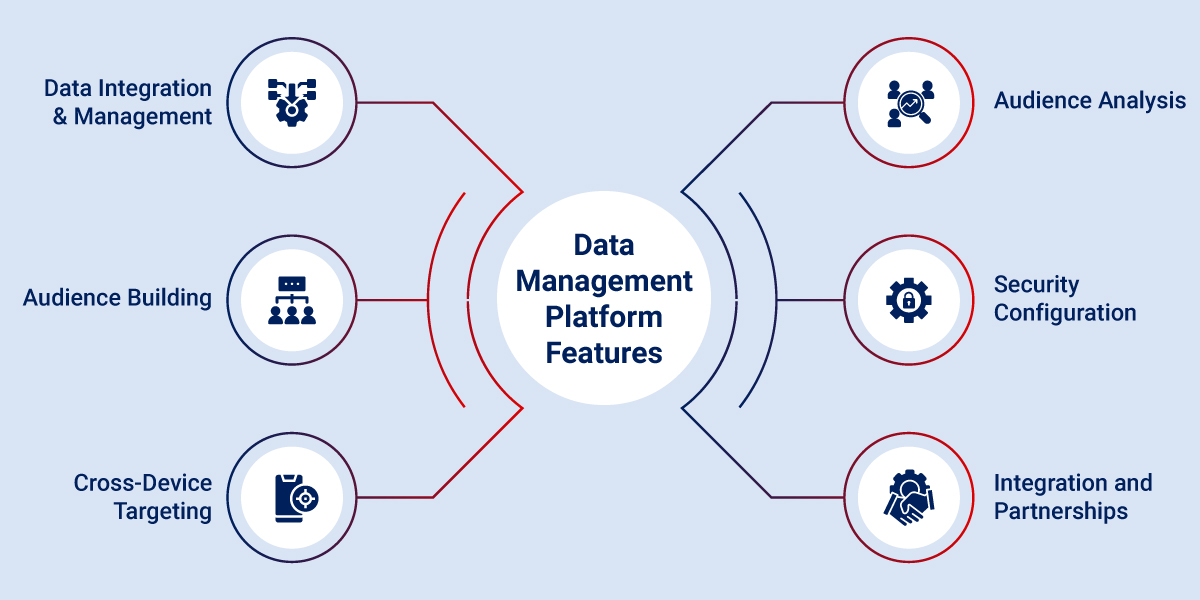
Source: Rishabhsoft.com
Key Characteristics of a DMP
- Built for programmatic advertising activation, focusing on audience targeting rather than long-term user relationships.
- Relies heavily on third-party cookies and device IDs, making it less future-proof in a privacy-first ecosystem.
- Best at large-scale, anonymous audience segmentation, not persistent or deterministic user profiles.
- Short-term data retention, optimized for campaign execution instead of audience ownership.
- Declining strategic value as SSPs, DSPs, and advertisers prioritize first-party data signals.
How Publishers Use DMPs
Publishers typically use DMPs to:
- Segment audiences for programmatic sales
- Build lookalike audiences
- Improve targeting for SSPs and DSPs
- Increase CPMs via better audience signals
What Is a Customer Data Platform (CDP)?
A Customer Data Platform (CDP) is built to collect, unify, and manage first-party data across all user touchpoints—websites, apps, emails, subscriptions, and logins.
Unlike DMPs, CDPs focus on known or consented users and long-term relationships.
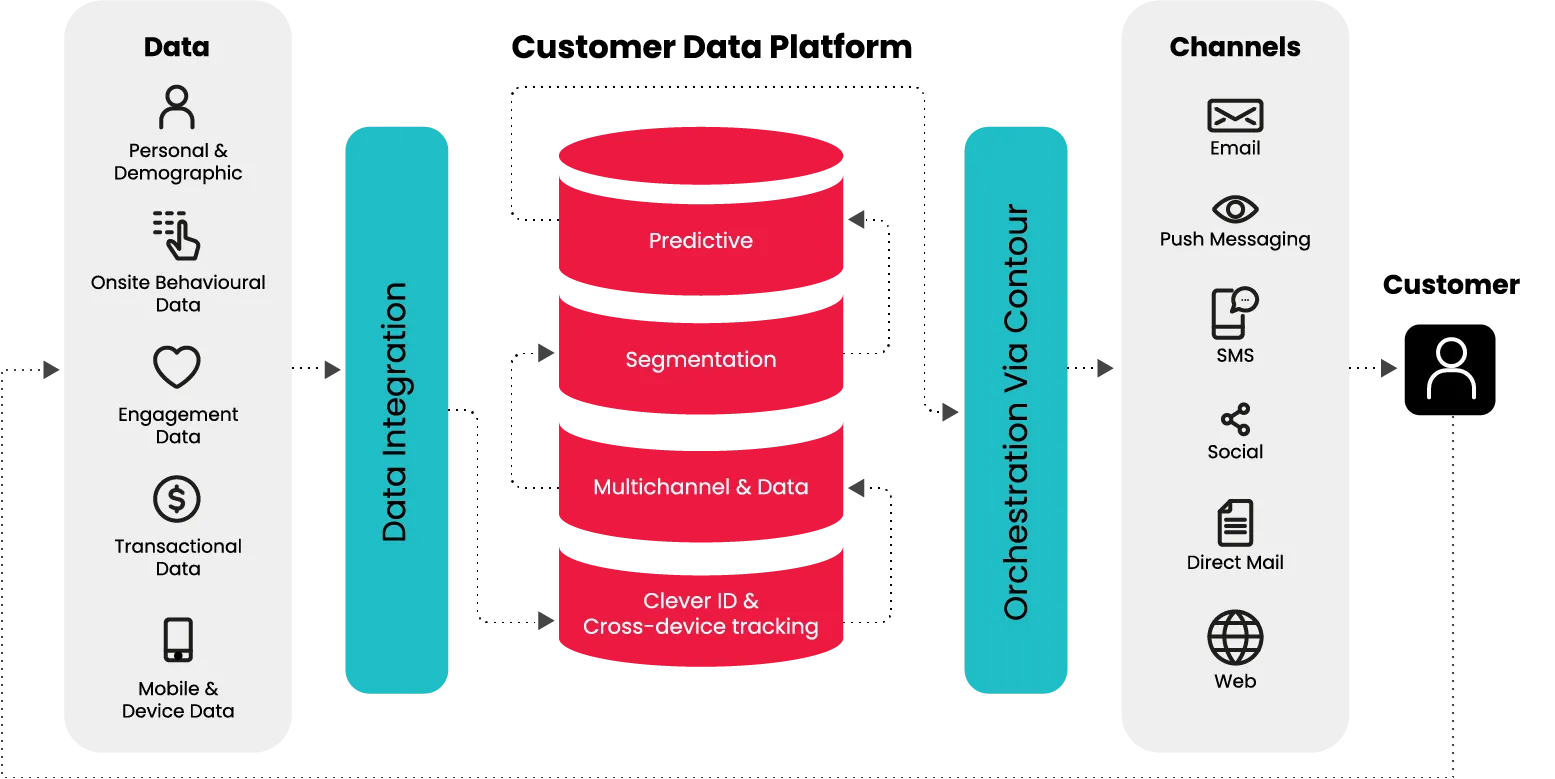
Source: Ciandt.com
Key Characteristics of a CDP
- Built around first-party, consented data, enabling publishers to own and activate high-quality audience signals.
- Creates persistent, unified user profiles using deterministic identifiers such as login IDs, emails, or user IDs.
- Privacy-first and regulation-ready, with native support for consent management and data governance.
- Enables premium monetization strategies, including PMPs, direct deals, and first-party data targeting.
- Future-proof in a cookieless environment, reducing reliance on third-party cookies and legacy identifiers.
How Publishers Use CDPs
Publishers use CDPs to:
- Build rich first-party audience profiles
- Power contextual and audience-based targeting
- Support subscription, newsletter, and CRM strategies
- Enable data-driven direct deals and PMP sales
DMP vs CDP: Key Differences Publishers Must Understand
| Feature | DMP | CDP |
|---|---|---|
| Primary Data Type | Third-party & anonymous | First-party & known |
| Data Retention | Short-term | Long-term |
| Identity | Cookies, device IDs | Email, login, user ID |
| Main Purpose | Ad targeting | Customer understanding & activation |
| Privacy Readiness | Weak (legacy) | Strong (future-proof) |
| Cookie Dependency | High | Low |
Do Publishers Still Need a DMP in 2025?
Short answer: Less than before, but not always zero.
When a DMP Still Makes Sense
- You rely heavily on open auction programmatic
- You work with multiple SSPs that still accept DMP segments
- You don’t have enough logged-in users yet
When a CDP Is the Better Choice
- You want to scale first-party data monetization
- You run subscriptions, newsletters, or memberships
- You sell direct deals and PMPs
- You care about long-term audience value, not just CPM spikes
How CDPs Help Publishers Increase Ad Revenue
Contrary to a common myth, CDPs are not just for marketing teams—they are powerful monetization tools.
Revenue Benefits of a CDP
- Higher CPMs via first-party segments
- Better fill rates for premium demand
- Stronger PMP and direct sales storytelling
- Reduced reliance on third-party cookies
- Improved brand safety and data transparency
Choosing the Right Data Strategy as a Publisher
Before choosing a platform, ask yourself:
- Do we have logged-in users or subscribers?
- Are we selling direct or PMP inventory?
- How dependent are we on open auction demand?
- Do we want short-term CPM lifts or long-term growth?
Smart Publisher Strategy in 2026
- Invest in first-party data
- Use CDPs as the core data layer
- Reduce reliance on cookie-based DMPs
- Combine data with contextual targeting
- Work with demand partners that value transparency
Conclusion
DMPs and CDPs each offer unique value, but they address different needs within the marketing stack. A clear understanding of their differences allows publishers to select the right platform based on their objectives. In some cases, leveraging both can provide a more comprehensive approach, supporting everything from ad targeting to long-term audience relationships.