


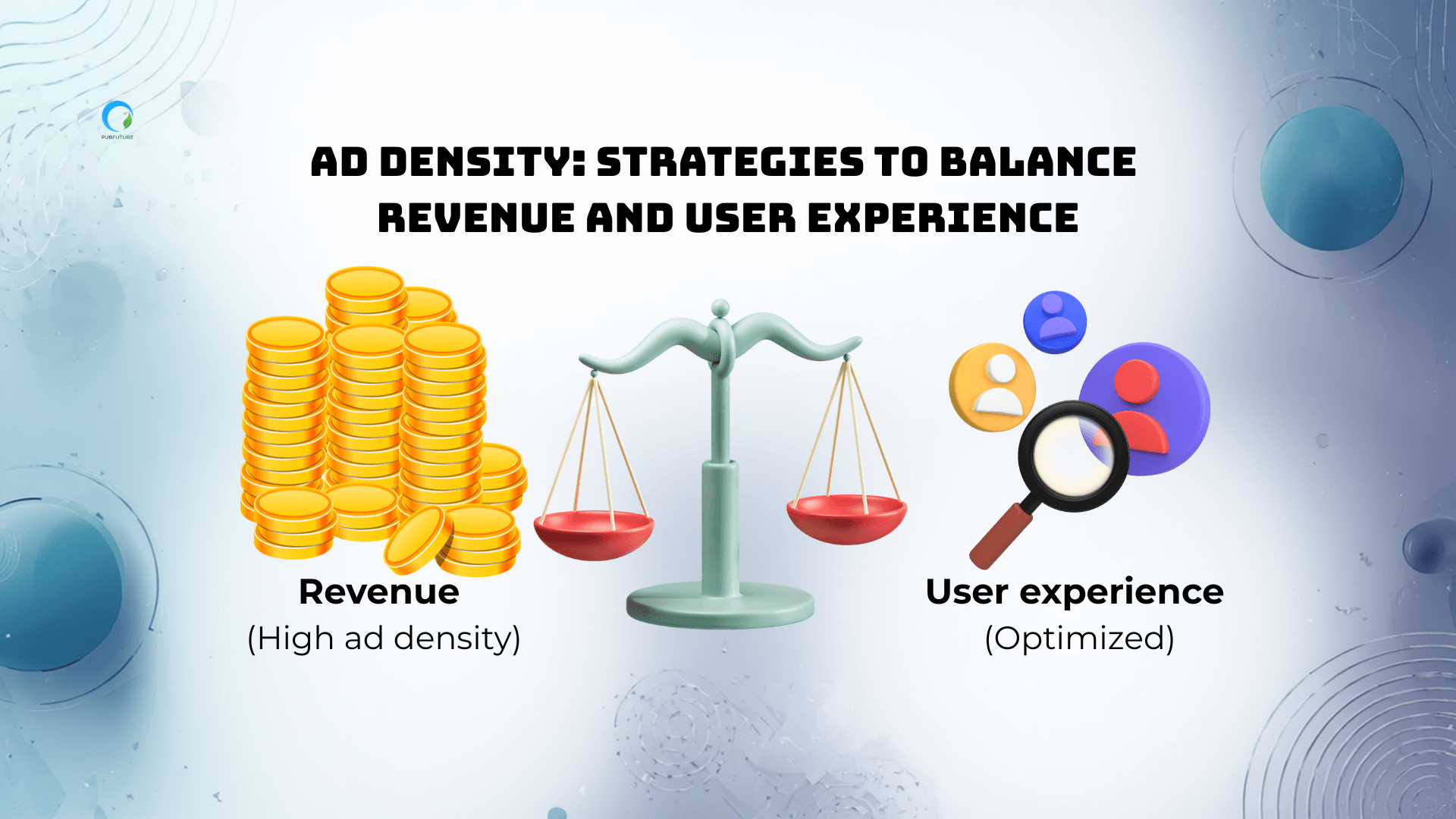
In the high-stakes world of programmatic advertising, publishers often face a polarizing dilemma: How many ads are too many? While it is tempting to believe that more ad units lead to higher revenue, the reality is dictated by a concept known as Ad Density. Managing this metric is no longer just a recommendation—it is a requirement for survival in Google’s search rankings and a necessity for maintaining a loyal audience.
Ad Density: Beyond Simple Counts
Ad density refers to the proportion of advertising content relative to editorial content on a webpage. Rather than focusing solely on the number of ads, ad density considers how much visual and spatial weight advertising occupies within the reading experience.

From a practical perspective, it includes:
- The vertical space ads take up compared to content
- The placement of ads (above vs. below the fold)
- How frequently ads interrupt the natural flow of reading
Industry discussions increasingly emphasize that ad density is as much qualitative as it is quantitative. Two pages with the same number of ads can feel drastically different to users depending on layout, spacing, format, and load behavior.
Why Ad Density Matters More Than Ever
1. User Experience Directly Impacts Revenue
Excessive or poorly placed advertising leads to:
- Higher bounce rates
- Shorter session durations
- Increased ad-blocker adoption
Once users feel that ads are intrusive, regaining their trust becomes difficult. Sustainable monetization depends on retaining users, not just monetizing pageviews.
2. Search Visibility and Page Performance Are at Stake
Search engines increasingly reward pages that deliver strong user experience signals. Heavy ad layouts can negatively affect:
- Core Web Vitals (especially LCP and CLS)
- Mobile usability
- Overall page load performance
Sites that fail to control ad density risk losing organic traffic, which ultimately undermines ad revenue itself.
3. More Ads Do Not Guarantee Higher CPMs
Programmatic buyers value:
- Viewability
- Brand safety
- Clean environments
Overcrowded pages often dilute attention, resulting in:
- Lower viewability rates
- Reduced advertiser demand
- Depressed CPMs and RPMs
In many cases, fewer high-quality placements outperform a large number of low-performing slots.
The “30% Rule” and the Google Intervention
Why does the 30% threshold matter? Google’s Chrome Ad Filtering and its Search Console algorithms use this benchmark to identify “intrusive” experiences.
When a mobile page exceeds 30% ad density:
- Search Rankings Suffer: Google prioritizes “Page Experience.” High ad density often correlates with poor Core Web Vitals (specifically LCP and CLS), leading to a drop in organic traffic.
- Ad Blocking Risk: Browsers like Chrome may proactively block all ads on a site that repeatedly violates these standards, essentially cutting off revenue entirely.
The Paradox of Diminishing Returns
It is a common misconception that doubling your ad units doubles your revenue. In programmatic ecosystems, excessive ad density often leads to:
- Ad Blindness: When users are overwhelmed by banners, they subconsciously “filter out” ad-heavy areas. This results in a plummeting Click-Through Rate (CTR).
- Lower Viewability: If a page is cluttered, ads compete for the user’s attention. Low viewability scores lead to lower-quality bids from Demand-Side Platforms (DSPs), eventually driving down your CPM (Cost Per Mille).
- Reduced Page Speed: Every ad call requires JavaScript execution. Excessive calls increase latency, leading to higher bounce rates before the ads even have a chance to load.
Strategic Strategies to Optimize Density for Revenue
To maximize yield without sacrificing the user experience (UX), savvy publishers are shifting from “quantity” to “quality” using the following strategies:
1. Prioritize High-Viewability Placements
High-performing ad layouts focus on where ads appear, not how many exist.
- Above-the-fold placements deliver strong viewability but must be limited and carefully designed
- In-content placements perform best when aligned naturally with paragraph breaks
- Below-the-fold ads can add incremental revenue without disrupting initial engagement
The goal is to integrate ads into the content flow rather than compete with it.
2. Implement Smart Lazy Loading
Lazy Loading is a game-changer. By only triggering the ad request when the user scrolls near the placement, you ensure:
- Faster initial page load speeds.
- Higher viewability scores (since ads only load when they are about to be seen).
- Higher CPMs because advertisers are willing to pay more for “guaranteed” eyeballs.
3. Leverage “Ad Refresh” (The Invisible Revenue Booster)
Instead of adding more slots to a page, use Smart Ad Refresh. This allows a single ad slot to display a new ad every 30, 45, 60, or 90 seconds—provided the user is still actively engaging with that part of the page. This increases your total Impressions per Session without increasing the physical ad density on the page.
By combining lazy loading and smart ad refresh, publishers can strike a sustainable balance between revenue growth and user experience—and platforms like Pubfuture are designed specifically to support that balance.
4. Monitor the “Above the Fold” Experience
The first impression is vital. Ensure that the first screen a user sees (Above the Fold) is not dominated by ads. A common mistake is placing a large 300×250 banner at the very top, which can easily exceed the 30% density limit on smaller mobile screens.
Conclusion: The Sustainable Growth Mindset
Optimizing Ad Density is an exercise in long-term thinking. A site that respects its readers’ attention will enjoy longer session durations, more pages per visit, and a healthy relationship with search engines.
As a publisher, your goal should be to create an environment where ads feel like a natural part of the journey, not an obstacle to it. By staying under the 30% threshold and utilizing technical optimizations like lazy loading and smart refreshing, you can enjoy a “revenue lift” that doesn’t come at the cost of your audience.