


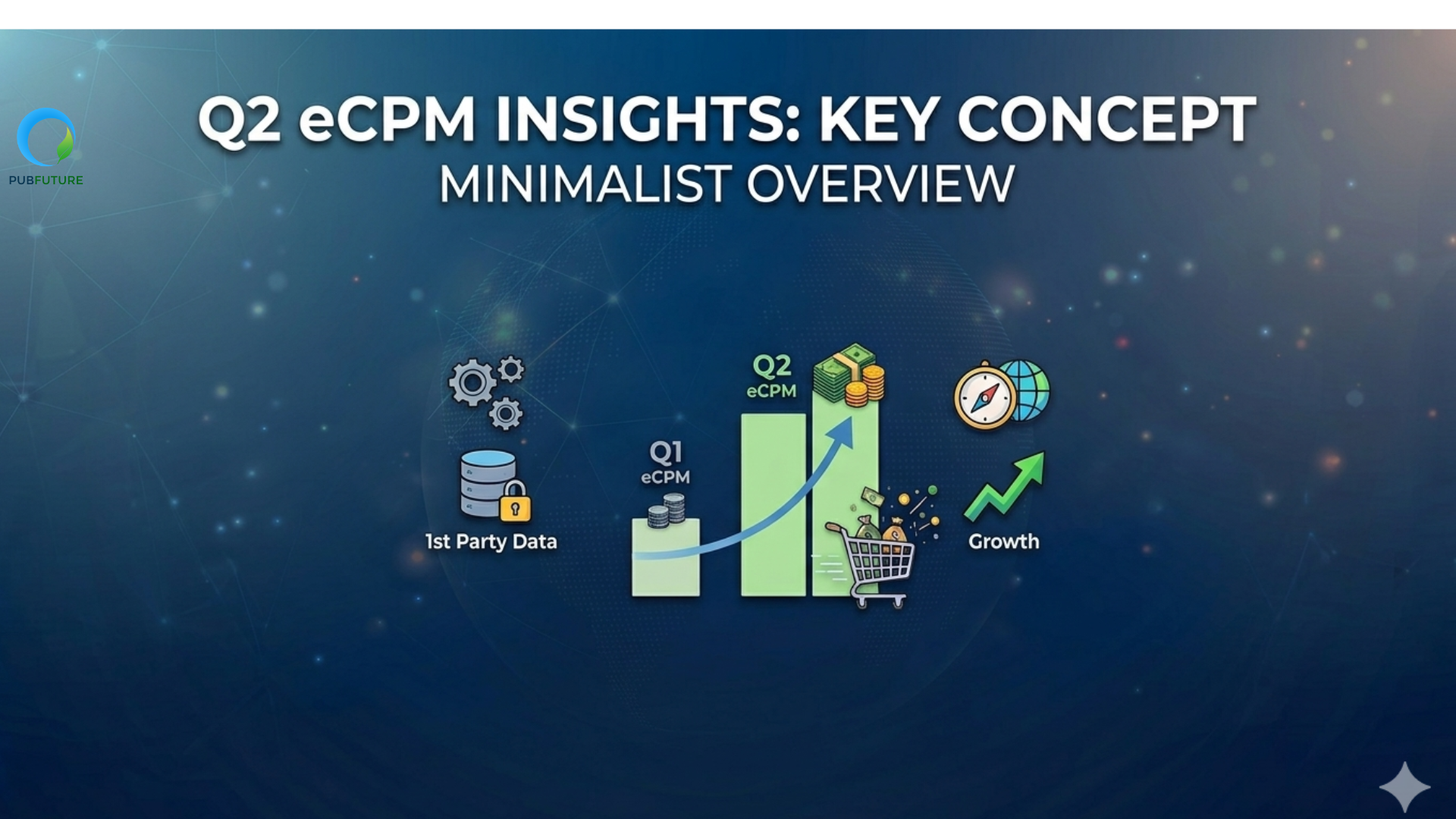
For most publishers, Q1 is a reset period. Advertising budgets are tight, CPMs dip, and performance often slows across the board. But as the market transitions into Q2, things begin to shift. Advertisers return with renewed budgets, campaigns scale, and demand starts to rise again.
However, here’s the catch: not all publishers benefit equally from this recovery.
Many see traffic growth in Q2 but fail to translate that into meaningful revenue gains. The reason isn’t market conditions. It’s strategy.
Understanding how eCPM behaves in Q2 and how to adapt early can make the difference between flat growth and significant revenue acceleration.
What Drives eCPM Changes in Q2
1. Advertiser Budget Reallocation
After a conservative start to the year, advertisers begin ramping up spend in Q2. Campaigns that were paused or scaled down in Q1 are reactivated, often with larger budgets and broader targeting.
Several high-value verticals become particularly active during this period:
- Travel: As users begin planning summer vacations, demand rises sharply especially around key periods like Memorial Day (late May), which marks the unofficial start of the summer travel season in the US.
- E-commerce: Mid-year shopping momentum builds with major promotional events such as Amazon Prime Day (typically in July) and various “Summer Sale” campaigns across global retailers. Brands start scaling campaigns in late Q2 to prepare, driving higher competition and CPMs.
- Finance: Q2 is heavily influenced by tax-related activity, especially around the Tax Day (April 15 in the US). During this period, financial services including tax tools, investment platforms, and credit products ramp up ad spend. Post-tax season, there’s also a shift toward investment and wealth management campaigns.
This increase in demand creates upward pressure on CPMs but only for publishers positioned to capture it.
2. Geo-Specific Demand Shifts
Not all traffic is monetized equally, especially in Q2.
Tier 1 markets such as the US, UK, Canada, and Australia typically see the strongest CPM recovery. Advertisers in these regions increase spend earlier and more aggressively, creating higher competition for inventory.
In contrast, Tier 2 and Tier 3 markets tend to experience more gradual growth. While these regions can provide scale, they often lack the same pricing power.
For publishers with a global audience, GEO mix becomes a critical factor in overall eCPM performance.
3. Ad Format Performance Differences
Q2 also highlights a widening gap between ad formats.
- Video ads consistently outperform other formats, often delivering significantly higher CPMs
- Display ads (standard banners) see moderate improvements but remain limited in earning potential
- Native ads remain stable but are highly dependent on content alignment and user intent
This divergence means that relying on a single format especially display can limit revenue growth, even as demand increases.
The Q2 eCPM Patterns Most Publishers Overlook
1. Traffic Growth Doesn’t Guarantee Revenue Growth
One of the most common misconceptions is that more traffic automatically leads to higher earnings.
In reality, publishers often experience increased traffic in Q2 without a proportional rise in revenue. This typically comes down to:
- Low-quality or non-converting traffic
- A weak GEO distribution
- Poor alignment between traffic and advertiser demand
Without optimization, traffic growth alone has limited impact on eCPM.
2. Underutilization of High-CPM Formats
Despite clear market trends, many publishers continue to rely heavily on traditional banner ads.
This creates a major missed opportunity.
High-performing formats such as:
- Outstream video
- In-article video
- Sticky and high-viewability units
are often underused even though they consistently deliver stronger returns.
Publishers who fail to diversify their ad stack risk leaving significant revenue on the table.
3. Inefficient Ad Placement Strategy
Placement matters just as much as format.
Ads placed below the fold or in low-visibility areas tend to generate:
- Lower viewability rates
- Reduced engagement
- Lower CPMs
In Q2, when advertiser demand increases, optimizing placement becomes even more important. Publishers who align ad positions with user behavior focusing on visibility and interaction see the biggest gains.
Key Q2 eCPM Trends Backed by Data
While performance varies by niche and audience, several consistent trends define Q2:
- Video CPMs can be 2–4x higher than display, driven by strong advertiser demand
- Mobile traffic dominates volume, but desktop often delivers higher CPMs
- US traffic remains the top revenue driver, with significantly higher advertiser competition
The key takeaway is simple:
eCPM is not just about how much traffic you have, it’s about how effectively you monetize it.
Success in Q2 comes down to combining:
- The right traffic
- The right formats
- The right placements
How Publishers Can Maximize eCPM in Q2
1. Diversify Ad Formats
A single-format strategy is no longer enough.
Publishers should aim to combine:
- Display ads for baseline coverage
- Video ads for high CPM opportunities
- Native ads for seamless integration
Among these, video stands out as the most impactful addition. Formats like outstream and in-article video allow publishers to monetize without disrupting user experience while significantly increasing revenue potential.
2. Optimize for High-Value GEOs
Not all traffic contributes equally to revenue.
Focusing on Tier 1 GEOs such as the US, UK, Canada, and Australia can dramatically improve overall eCPM.
For publishers with global traffic, segmentation is key. By analyzing performance by region and optimizing accordingly, it’s possible to:
- Prioritize high-value users
- Adjust ad strategies per GEO
- Maximize returns from existing traffic
3. Improve Viewability and Engagement
Higher viewability leads to higher CPMs.
To improve performance, publishers should:
- Prioritize above-the-fold placements
- Implement sticky units where appropriate
- Optimize page layout for better user flow
At the same time, increasing session duration and reducing bounce rates can further enhance monetization opportunities.
4. Leverage Multiple Demand Sources
Relying on a single demand source can limit competition—and revenue.
By integrating multiple demand partners, publishers can:
- Increase bidding competition
- Access a broader pool of advertisers
- Improve fill rates and CPMs
Solutions such as header bidding or unified auctions help ensure that every impression is monetized at its full potential.
Why Video Ads Are a Game-Changer in Q2
Among all monetization strategies, video stands out as the most effective in Q2.
Advertisers are increasingly prioritizing video inventory due to:
- Higher engagement rates
- Better storytelling capabilities
- Stronger conversion performance
For publishers, this translates into:
- Significantly higher CPMs
- Increased demand from premium advertisers
- A scalable way to boost revenue without major content changes
Most importantly, video can be integrated seamlessly especially with outstream formats that don’t require existing video content.
Publishers who adopt video early in Q2 consistently outperform those who wait.
Ready to Maximize Your Q2 Revenue?
Q2 isn’t just a recovery period, it’s an opportunity to get ahead. While ad demand is rising, not every publisher will benefit equally.
Those who diversify formats (especially video), optimize GEOs, and improve viewability will see the biggest gains. Just as importantly, Q2 is the perfect time to test and refine your monetization strategy before competition intensifies later in the year.
With solutions like PubFuture, publishers can tap into premium video demand, optimize performance across GEOs, and unlock higher eCPMs with minimal effort.