


In the era of data-driven advertising, personalization has become the key to capturing user attention and maximizing campaign performance. One of the most powerful technologies enabling this transformation is Dynamic Creative Optimization (DCO).
Instead of serving the same ad creative to every user, DCO allows advertisers to automatically generate and deliver personalized ads in real time based on user data, context, and behavior. For publishers and advertisers working within the programmatic ecosystem, this technology can significantly improve engagement, click-through rates (CTR), and overall ad revenue.
In this article, we’ll explore what Dynamic Creative Optimization is, how it works in programmatic advertising, and why it has become a crucial tool for modern digital marketing strategies.
What is Dynamic Creative Optimization (DCO)?
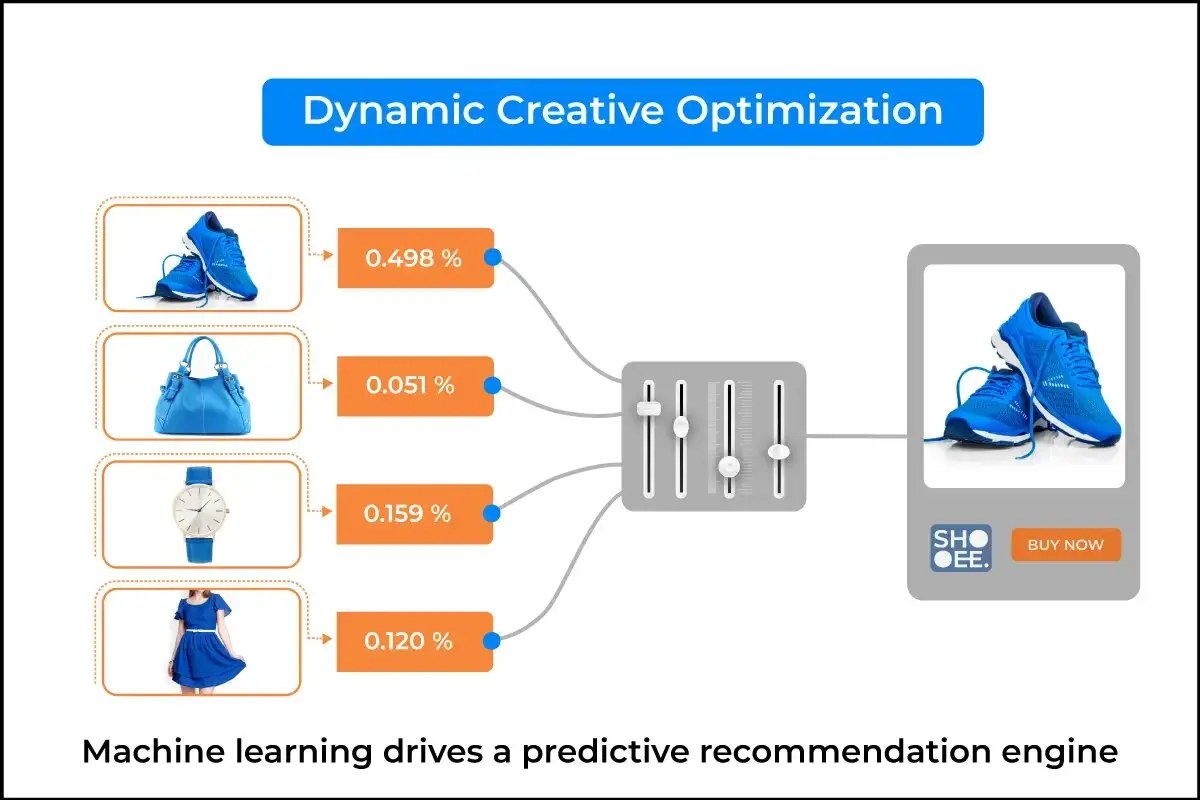
Dynamic Creative Optimization (DCO) is a programmatic advertising technology that automatically creates and delivers personalized ad creatives in real time by combining different creative elements such as:
- Images
- Headlines
- Calls-to-action
- Product information
- Backgrounds
- Colors
(Source: revx.io)
These elements are dynamically assembled based on audience data, location, device, browsing behavior, and contextual signals.
Instead of manually designing dozens or hundreds of ad variations, advertisers upload creative assets into a system. The platform then automatically builds the most relevant ad for each individual user.
How DCO Works: The Data Signals
The true strength of DCO lies in its ability to process real-time data. Here are the common “signals” that trigger a creative change:
- User Behavior: Past purchases, products viewed, or time spent on specific site pages.
- Geographic Location: Showing local store addresses or weather-appropriate clothing (e.g., promoting umbrellas if it’s raining in London).
- Demographics: Tailoring imagery based on age, gender, or language.
- Contextual Data: Matching the ad content to the article the user is currently reading.
- Device & Time: Changing the message depending on whether the user is on a mobile device at lunch or a desktop in the evening.
Why DCO Matters in Programmatic Advertising
1. Higher Engagement and CTR
When an ad reflects a user’s immediate needs or interests, they are significantly more likely to click. DCO typically yields a much higher Click-Through Rate (CTR) compared to static banners.
2. Creative Efficiency at Scale
Imagine needing 500 variations of an ad for different regions and products. Manually designing these would take weeks. DCO automates this process, allowing you to scale your creative output without draining your design budget.
3. Real-Time A/B Testing
DCO doesn’t just serve ads; it learns from them. The system identifies which combinations of headlines and images perform best and automatically shifts the budget toward the winning creatives.
4. Combating “Ad Fatigue”
By constantly refreshing the creative elements shown to a user, DCO prevents your audience from becoming “blind” to your brand, keeping your messaging fresh and relevant.
Example:
Without DCO, advertisers might run a single banner such as: “Buy Running Shoes – 20% Off.”
With Dynamic Creative Optimization, however, the message can automatically adapt based on different user signals.
For example, someone located in New York might see an ad like:
“Running Shoes for NYC Runners – Free Shipping Today.”
A shopper who previously browsed Nike products could receive:
“Nike Running Shoes – Limited Discount Available.”
Meanwhile, a mobile user browsing late at night might be shown:
“Night Running Gear – Shop Now.”
Through this dynamic process, each ad variation is automatically generated and optimized to maximize relevance and improve conversion potential.
DCO vs. Dynamic Creative (DC): What’s the Difference?
While they sound similar, the “O” in DCO makes a world of difference:
- Dynamic Creative Optimization (DCO): Uses Machine Learning to not only swap elements but also optimize the performance. It learns that “User A in New York prefers the Blue Banner over the Red one” and adjusts accordingly.
- Dynamic Creative (DC): Simply swaps elements based on rules (e.g., “If User is in Hanoi, show Hanoi Map”).
The Future of DCO: Generative AI
The next frontier of DCO is the integration of Generative AI. Soon, DCO engines won’t just swap pre-designed assets; they will generate entirely new, high-fidelity background images and copy on the fly, tailored to the specific aesthetic preferences of a single user.
Conclusion
Dynamic Creative Optimization is transforming the way digital advertising works. By combining automation, real-time data, and machine learning, DCO allows advertisers to deliver highly personalized ads at scale.
For advertisers, this means better performance and higher conversions. For publishers, it means more competitive auctions and improved ad revenue potential.
As programmatic advertising continues to evolve, Dynamic Creative Optimization will remain one of the most powerful technologies driving data-driven marketing success.
If you’re a publisher looking to increase your ad revenue through advanced programmatic demand, working with the right monetization partner is crucial.
At Pubfuture, we help publishers connect with premium demand sources and optimize their ad inventory through cutting-edge programmatic technology. Contact us today to discover how you can unlock higher CPMs and smarter ad monetization.